,fit=pad/https://images.clintlosee.com/images/clint-losee-photography-logo-b0be73a8.webp)

Best Print Sizes for Large Walls
The right size for a large wall isn't simply the biggest print that will fit. Learn how scale, composition, viewing distance, lighting, and print materials come together to create a sophisticated statement piece.
Best Print Sizes for Large Walls
A large wall takes more thought than just finding a large photograph. There's the proportions of the artwork, what furniture is sitting underneath it, how far away people will actually be standing, the light moving through the room at different times of day. Get those things right and the photograph feels like it belongs there. Get them wrong and even a great piece of art can end up looking undersized, or just kind of lost on the wall.
That's really the question when you're trying to figure out the best print sizes for large walls. There's no single fixed measurement that works for everything. It depends on the architecture, the photograph itself, and what you want the finished piece to actually do in the room.
With fine art landscape photography there's another wrinkle. A photograph can look great on a monitor and still fall flat once you blow it up. Large format prints give you room to actually see the fine detail, the depth, the atmosphere, the stuff that made the original shot worth printing in the first place.
What Are the Best Print Sizes for Large Walls?
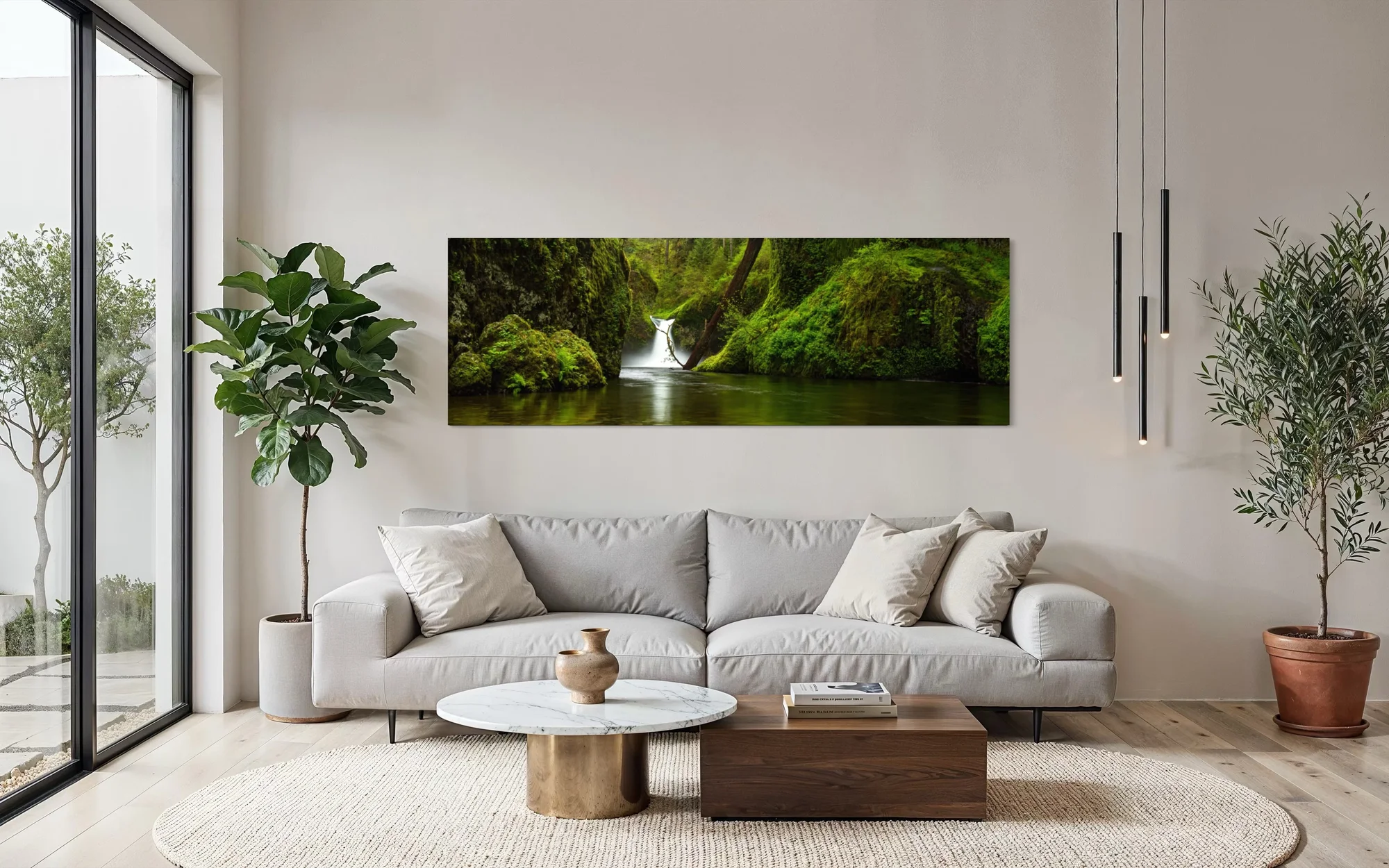
For a lot of substantial walls, something in the 40 to 60 inch range works well. I would probably say this would be the minimum starting point. Once the wall gets particularly wide, or the room itself is generous, moving into 60 to 90 inches can give a single photograph the presence it needs to actually function as a statement piece.
Those are starting points, not rules, and I mean that. A 60 inch photograph can dominate a small console wall while looking almost modest above a big sectional or a conference table. The architecture around it decides how much visual weight the print needs to carry.
Start with the wall, not the print catalog
Measure the usable wall space first. Account for windows, doors, sconces, built ins, whatever else is competing for that real estate. Then look at what's sitting below where the art will go. The relationship between the print and the furniture underneath it is one of the easiest things to miss, and one of the first things people notice when it's off.
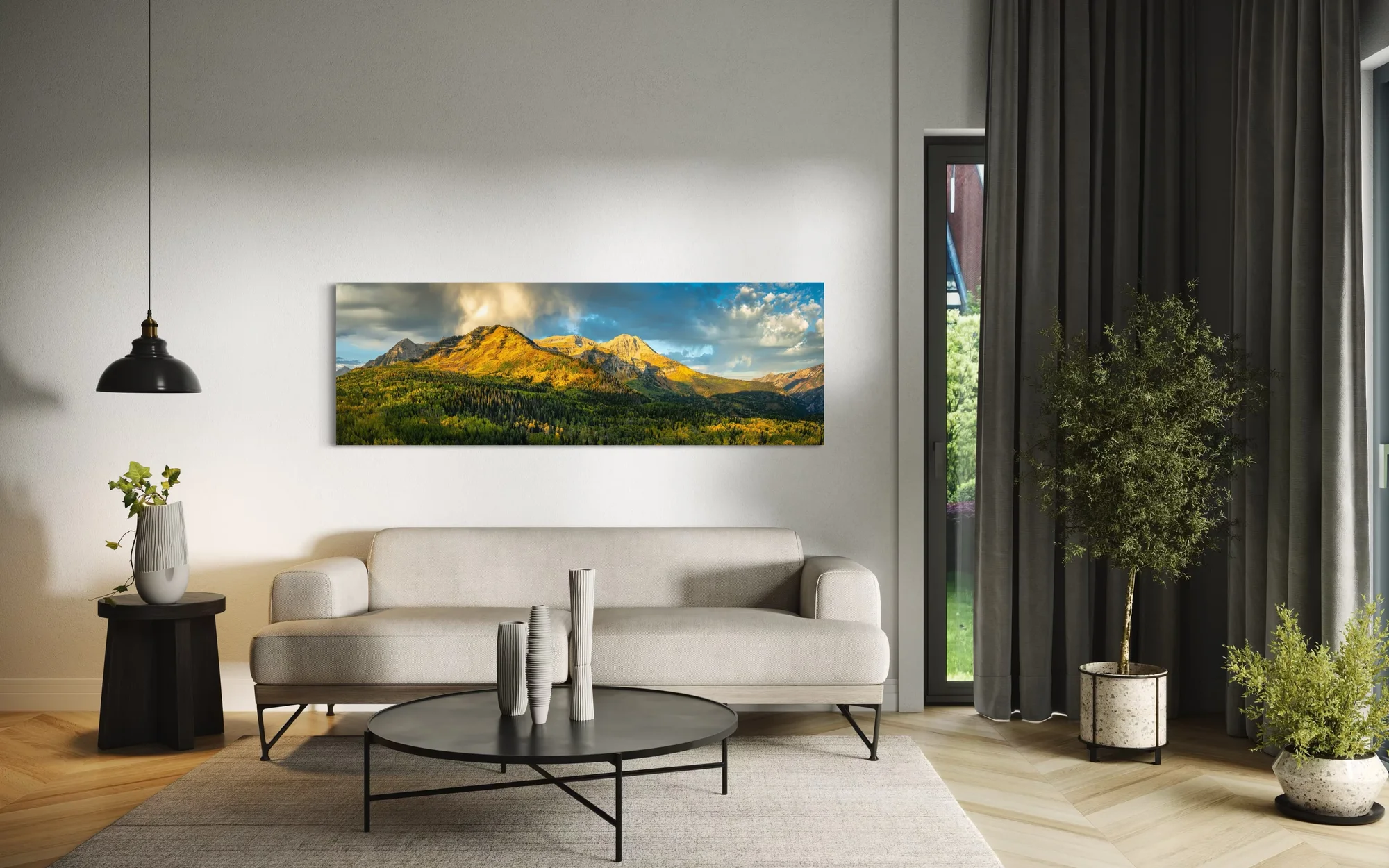
Above a sofa or credenza: A print at roughly two thirds to three quarters of the furniture width usually feels right.
Above a conference table: A big horizontal photograph can anchor the whole room, especially if the wall gets viewed from across the space.
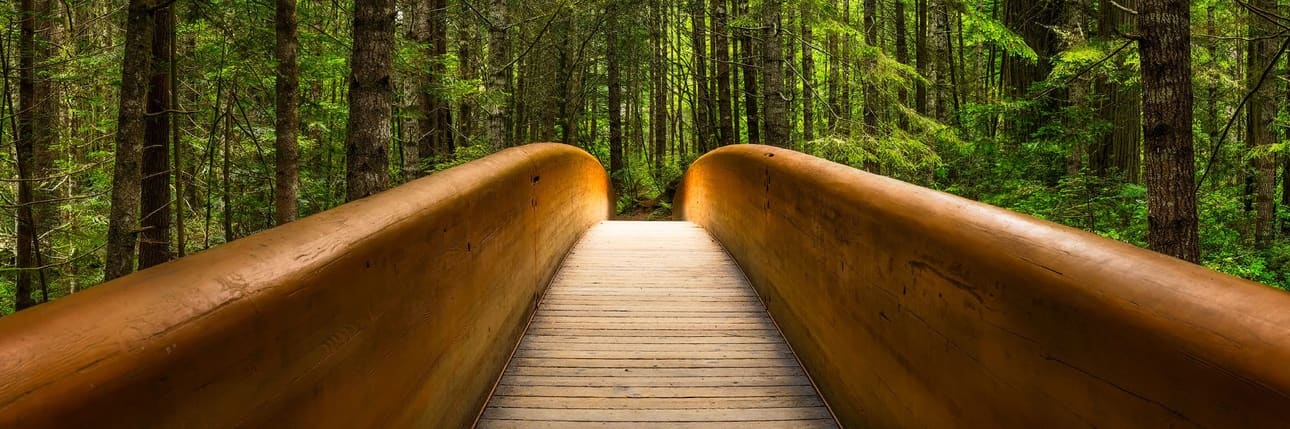
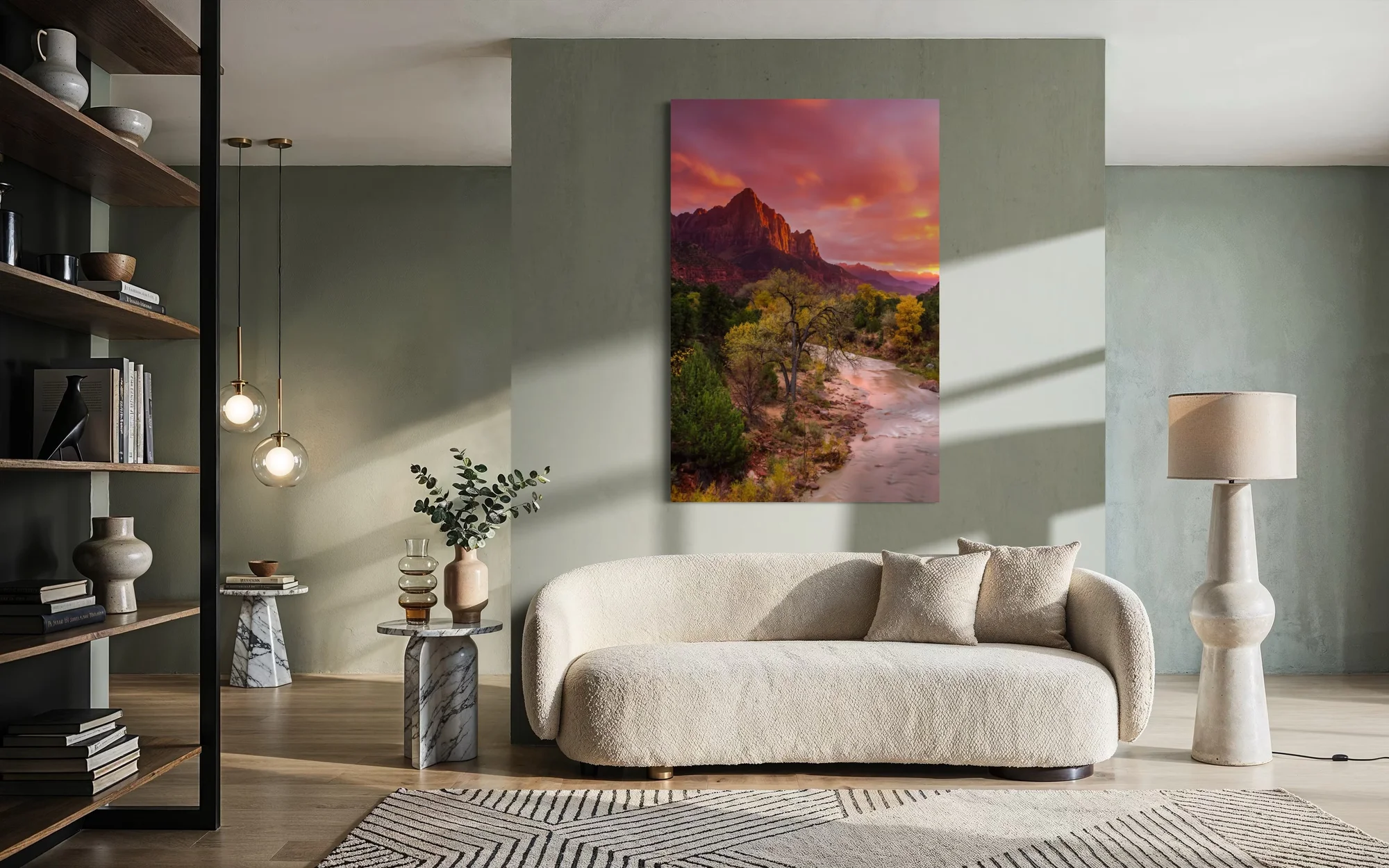
On a tall wall: A vertical composition often makes better use of the space than stretching a horizontal image wider just to fill it.
Across a large open wall: Think about one strong statement piece before defaulting to a collection of smaller works.
That last one is worth taking a bit of time on. Large walls get cluttered because the instinct is always to add more. One good photograph, sized right, usually carries more weight than five or six pieces fighting for attention.
How Large Should Photography Be on a Large Wall?
When you're thinking about the best photography print sizes for large walls, viewing distance matters as much as the wall itself does. Think about where people will actually be standing or sitting. A photograph mostly viewed from 15 feet away is different than one meant to be studied up close in a hallway.
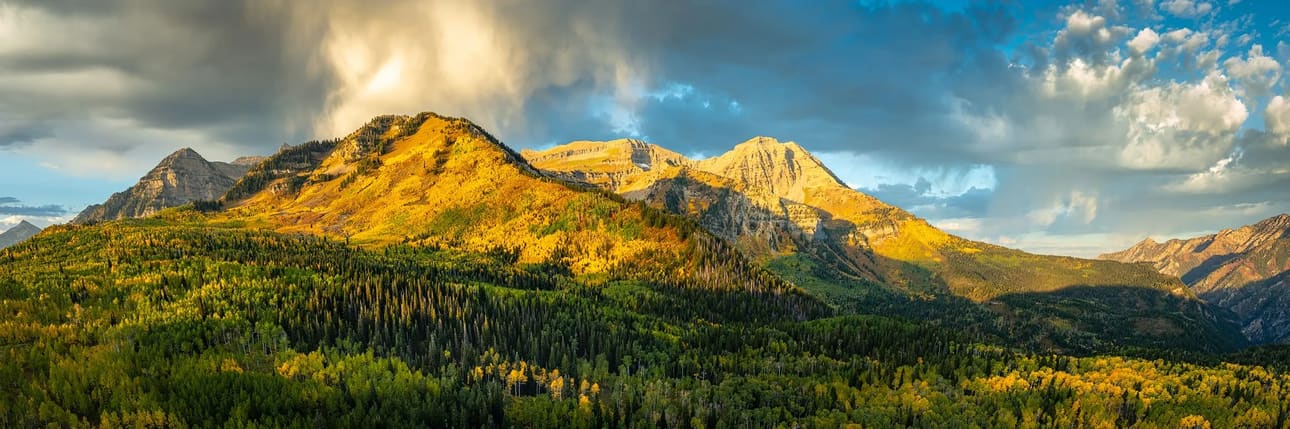
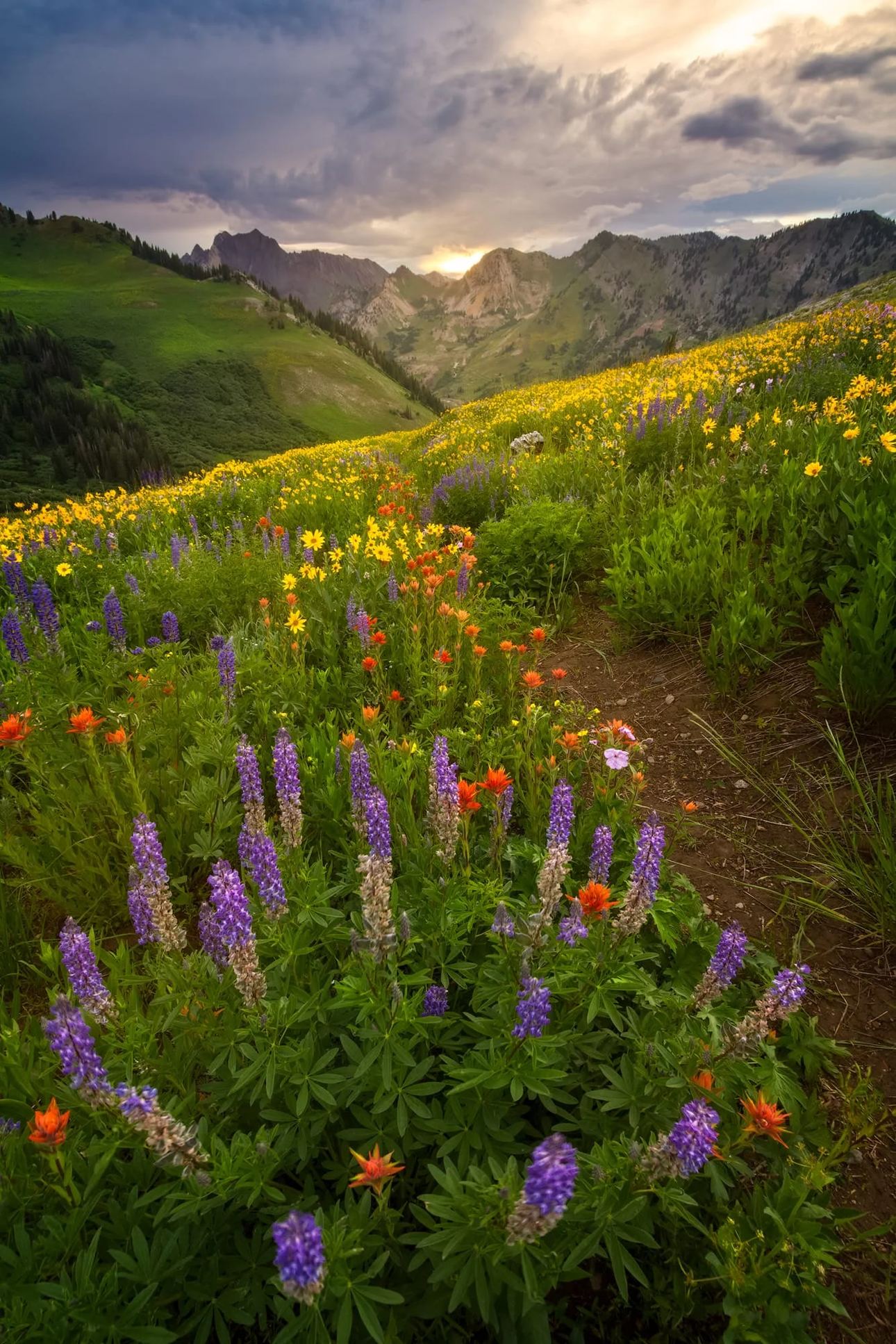
Landscape photography in particular benefits from scale. A mountain ridge might have layers of terrain, subtle atmospheric separation, texture in the snow, small foreground details that just get lost when the print is too small. Making it bigger gives all of that room to actually exist.
It changes how the composition reads too. At the right size, you're not just looking at a picture of a landscape anymore. You start reading the depth between foreground, middle distance, and the peaks way off in back. The tonal shifts in the clouds or the rock stop being background noise and become part of the experience.
Large walls don't automatically mean panoramic prints
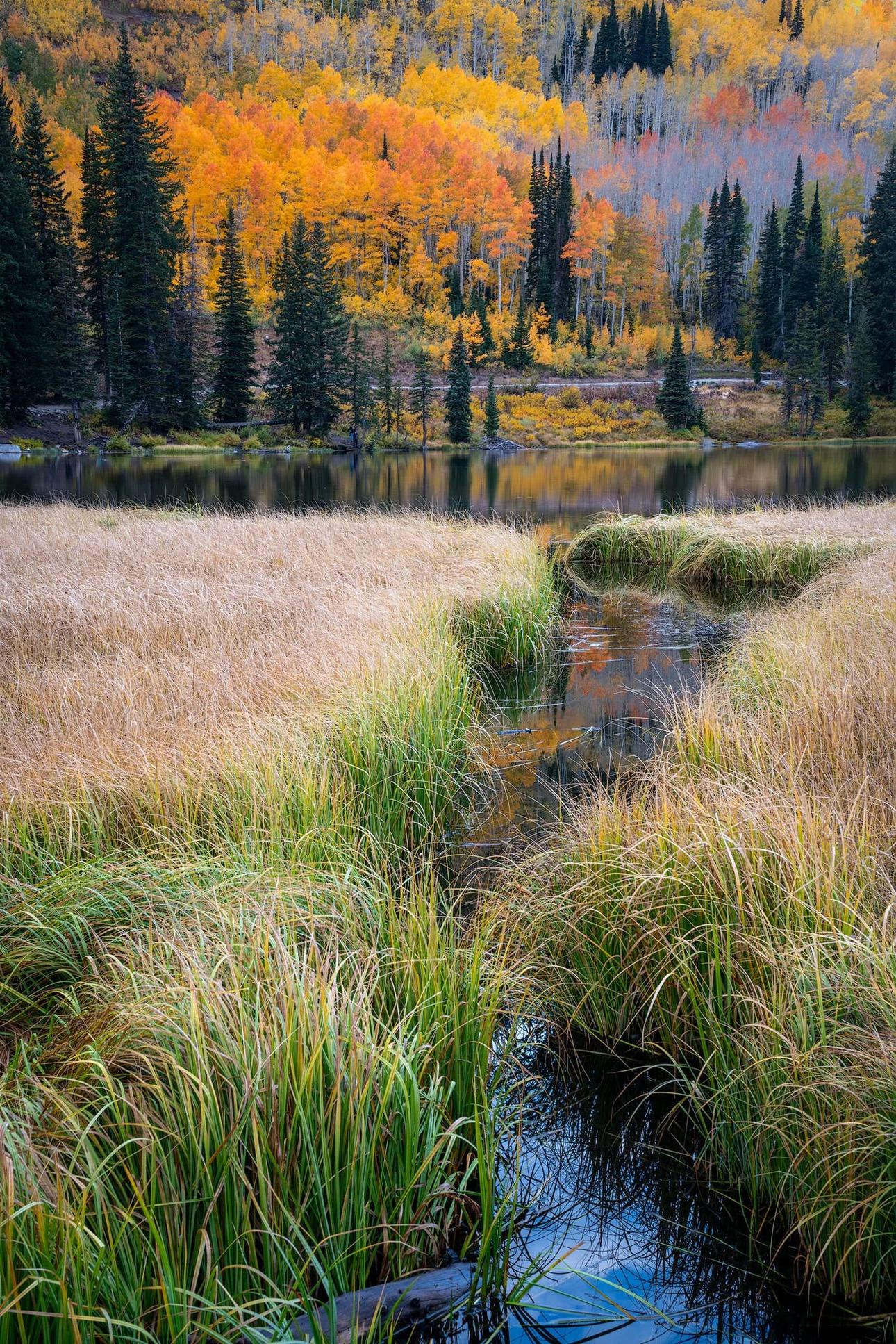
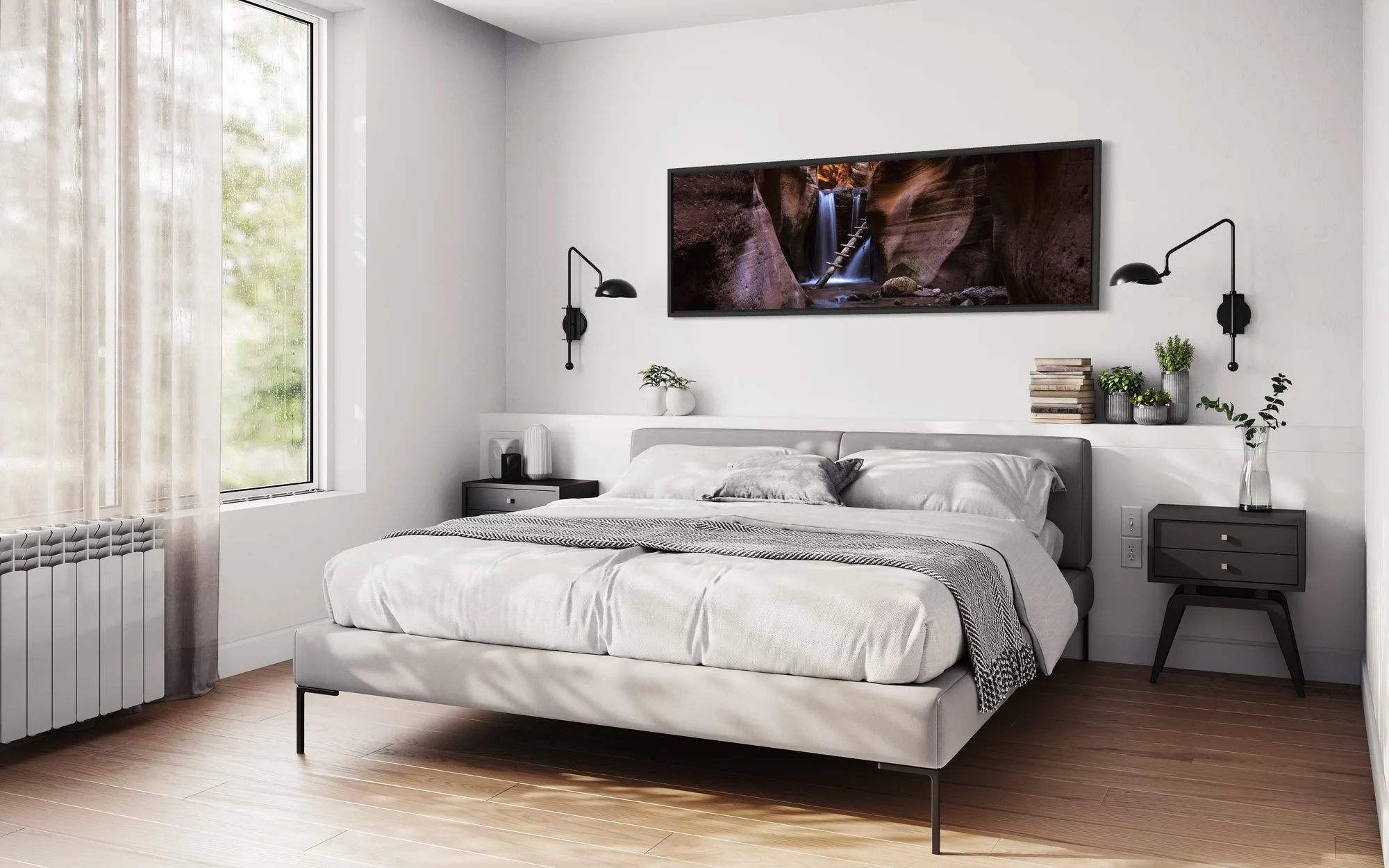
A wide wall doesn't necessarily need the widest photograph you can find. Sometimes panoramic photography is exactly right, especially above a long sofa, credenza, or conference table. Other times a strong vertical image ends up working better with the architecture.
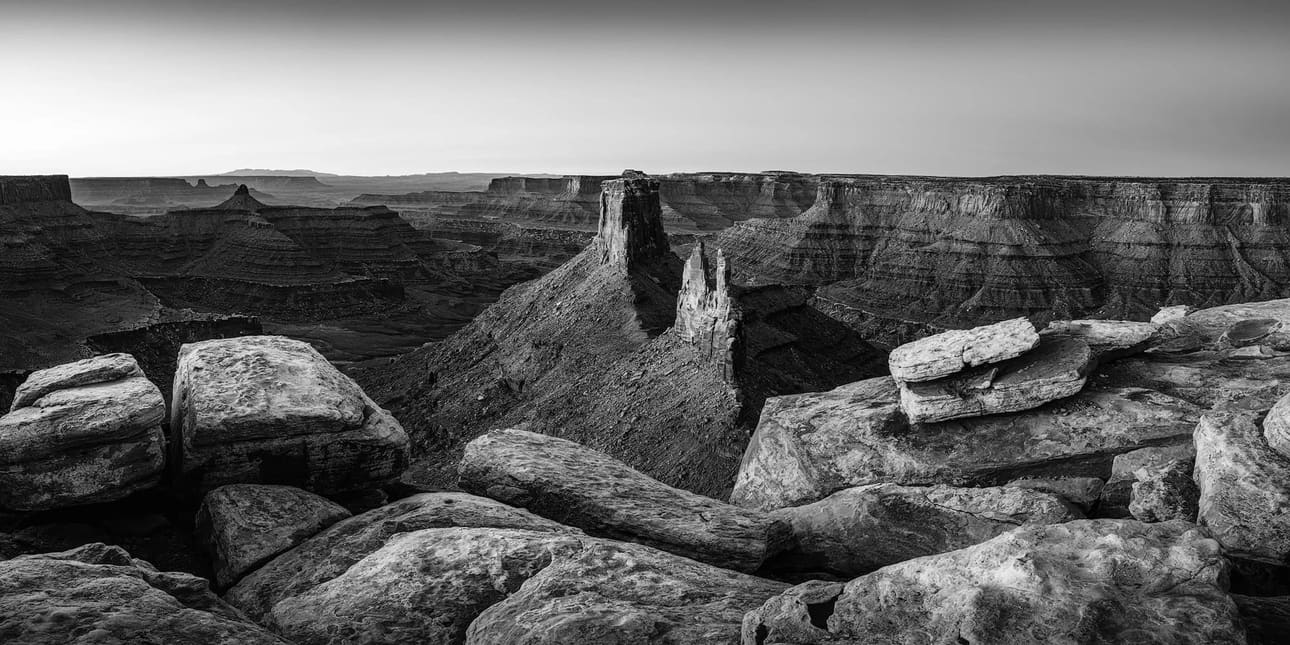
Let the photograph make the call. A mountain scene with a dramatic vertical rise can lose everything that made it interesting once you force it into a panoramic crop. A wide desert or canyon vista might genuinely need that extra breathing room to work at all.
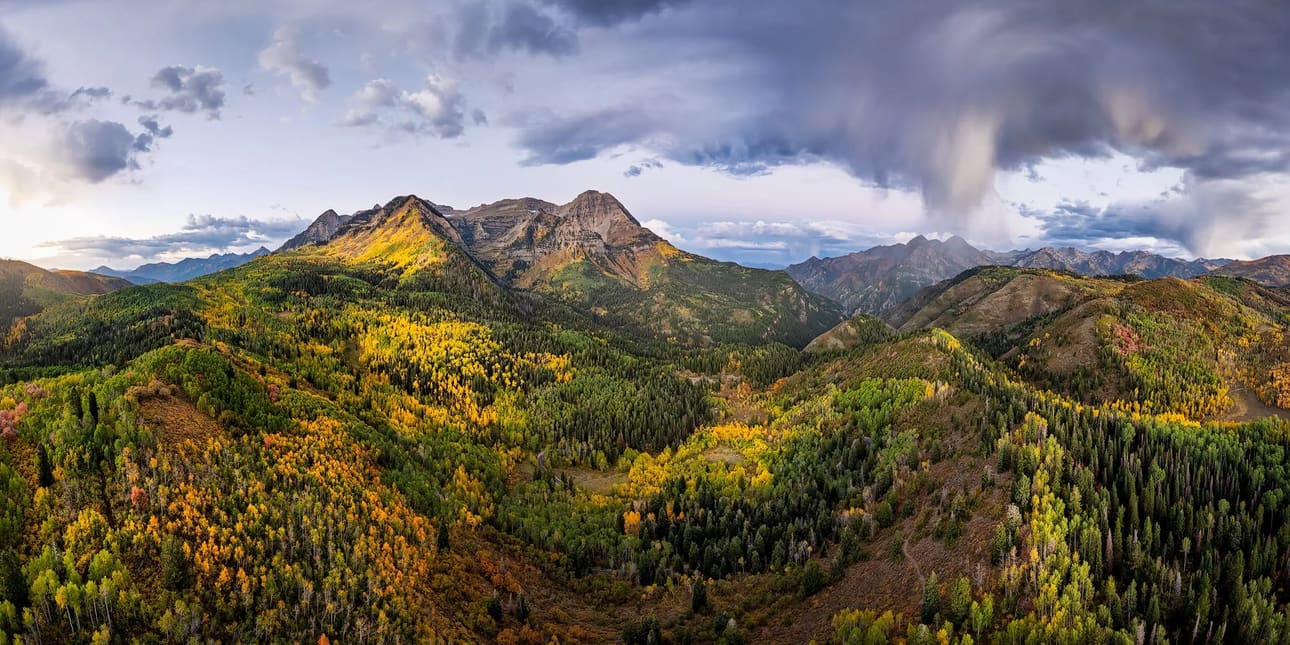
If the wall calls for width, take a look at my panoramic landscape photography prints. Just don't sacrifice a good composition to hit a measurement.
Print Size Should Follow the Photograph
Large format printing has a way of exposing shortcuts. Soft focus, heavy cropping, sloppy processing, not enough resolution in the original file, it's all much easier to see once the image is measured in feet instead of inches.
That's why I treat landscape photography meant for large reproduction differently than something shot mainly for a phone screen. The original file needs enough resolution and tonal information to hold up under real enlargement. Focus has to be dead on. Processing needs restraint. And the composition itself needs to have something worth looking at once it's blown up to real scale.
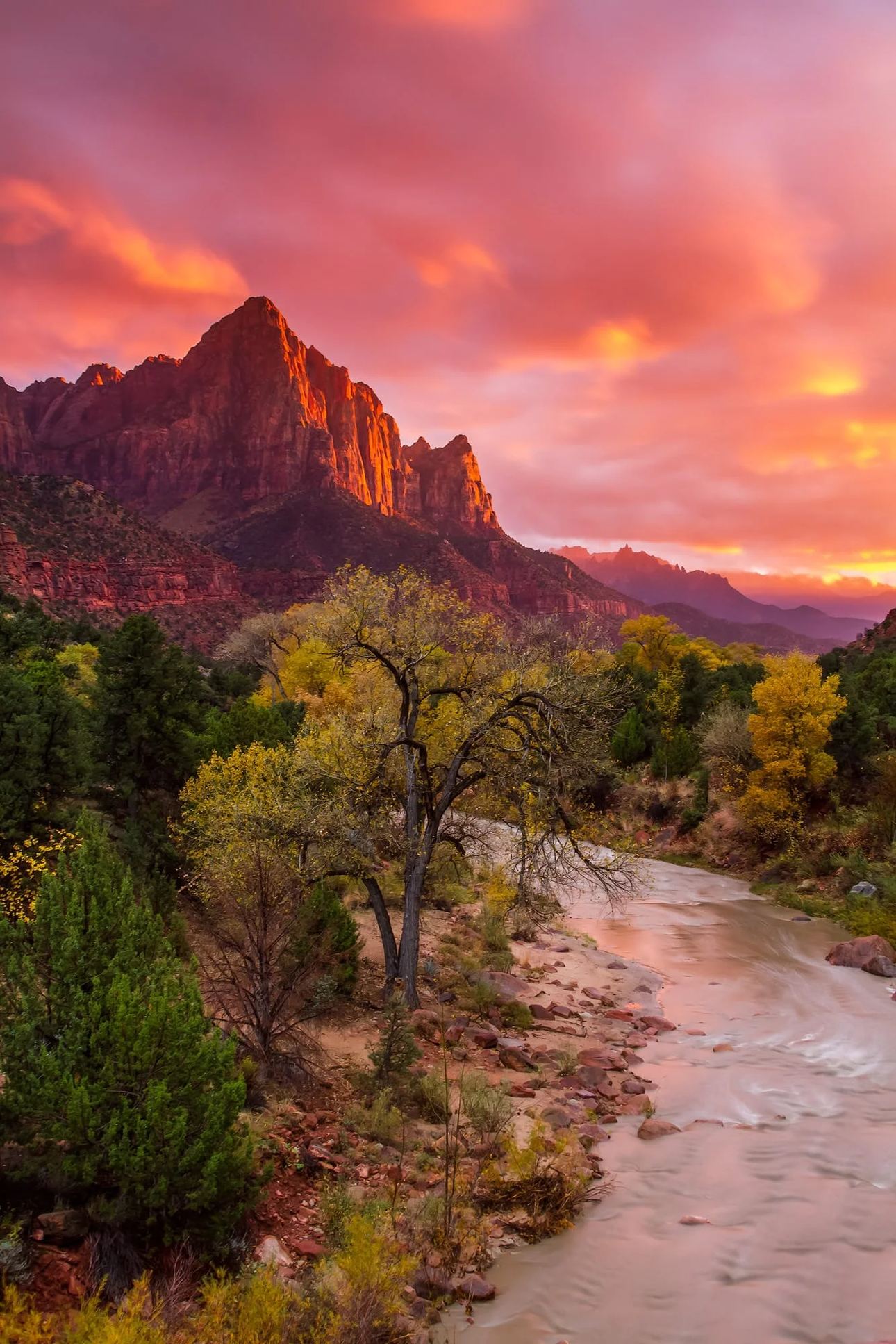
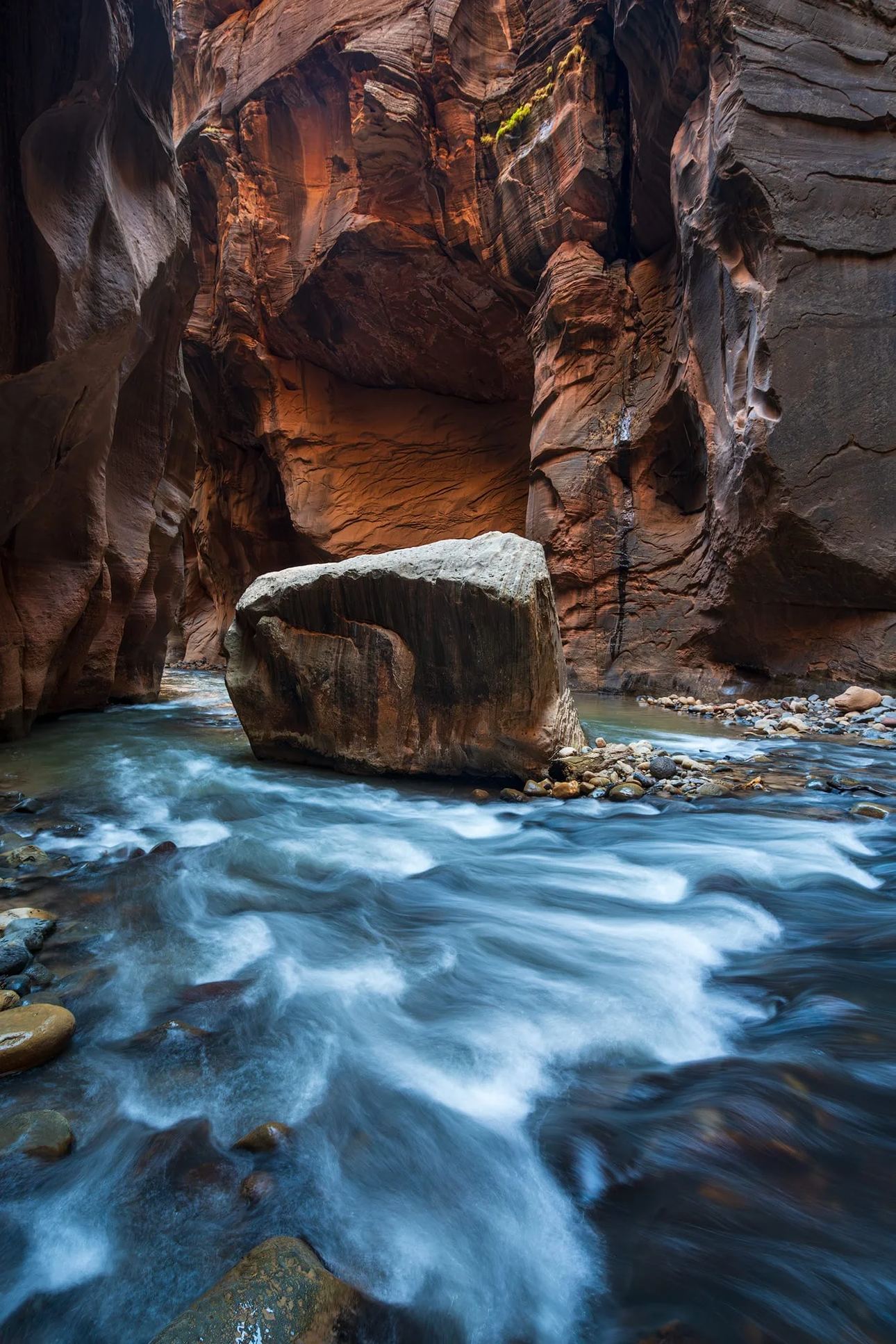
This matters a lot with Utah Landscape Photography Prints specifically. A large fine art print shouldn't feel like a digital photo that just happened to get printed bigger. The physical print should show you things a screen never could, fine texture in the rock, subtle layers of atmosphere across a distant range.
Choosing the Right Print Material for Large Walls
Once you've landed on the photograph and roughly what size it needs to be, the surface becomes part of the decision. Large artwork interacts with a room's lighting a lot more than a small framed piece does. Windows, recessed lighting, pendant fixtures, direct sun, it all changes how the finished piece actually reads.
ChromaLuxe Metal Prints
ChromaLuxe metal prints work especially well in contemporary spaces. The surface gives you crisp detail and rich color without the visual bulk of a traditional glass frame. Metal has a bit of an architectural quality to it too, which makes it a natural fit for modern homes, executive offices, and commercial interiors.
If durability matters in the space, metal is also just practical. You get a refined look without the upkeep or fragility that comes with a conventional framed piece.
HD Acrylic TruLife
When depth and luminosity matter to the photograph, HD acrylic TruLife fine art prints are worth a look. The acrylic face adds real visual depth between the viewer and the image, while the print underneath handles the color and tonal detail.
This works especially well with photographs that have luminous skies, water, snow, or that kind of soft atmospheric light. The material has presence on its own, it doesn't need an elaborate frame to make a statement.
Canvas Gallery Wraps
Canvas gallery wraps go a different direction. The surface is quieter, softer, less reflective, which makes it a good fit for interiors where a more traditional fine art presentation feels right.
Canvas holds up beautifully at large sizes, especially in homes, hospitality spaces, and interiors built around natural materials. The goal isn't picking the most expensive material on the list. It's finding the surface that actually makes sense for the photograph and the room it's going into.
Common Mistakes When Buying Prints for Large Walls
Most disappointing large wall installations aren't really about the photography. They're about proportion.
Going too small: A great photograph can disappear with several feet of empty wall around it.
Picking the dimensions first: Don't force every photograph into the same shape. Let the composition decide the orientation and proportions.
Ignoring viewing distance: A large print might look massive up close and then settle into perfectly proportioned once you back up across the room.
Overlooking the lighting: A print surface can look completely different in direct sun versus overhead fixtures versus next to a big window.
Adding too many small pieces: A collection can work, but one substantial photograph often makes a cleaner, more confident focal point.
Forgetting the furniture: Art needs to relate to what's around it. A huge photograph above a narrow console can feel off even when the wall itself is plenty big.
Large Format Photography for Residential and Commercial Spaces
The scale of a piece changes how a room feels. In a home, a large landscape can give the space a sense of permanence without making it feel crowded. In an office or reception area, one substantial photograph can give the whole room a stronger identity than anything else you could put on the wall.
The subject matters too. A mountain range, a desert canyon, an alpine valley, a quiet stretch of wilderness, these add visual interest without turning the room into a showroom. For offices, clinics, and hospitality spaces, landscape photography has the advantage of standing out without being distracting.
That's part of why I don't treat these photographs as generic wall decor. The image has to work as a photograph first. Then it has to hold up as an object in a real room, under real light, at a size where every flaw is easy to spot.
For walls that can handle strong vertical scale and rugged terrain, take a look at the Mountain Landscapes collection. Warmer interiors might do better with the geological textures and richer earth tones in Southern Utah and Red Rock landscapes or the broader Desert Southwest collection.
How to Choose the Best Print Size for Your Wall
It doesn't need to be complicated. Measure the wall, note what furniture sits below it, think about where people will mostly be viewing it from. Then pick the photograph based on its composition and work the size out from there.
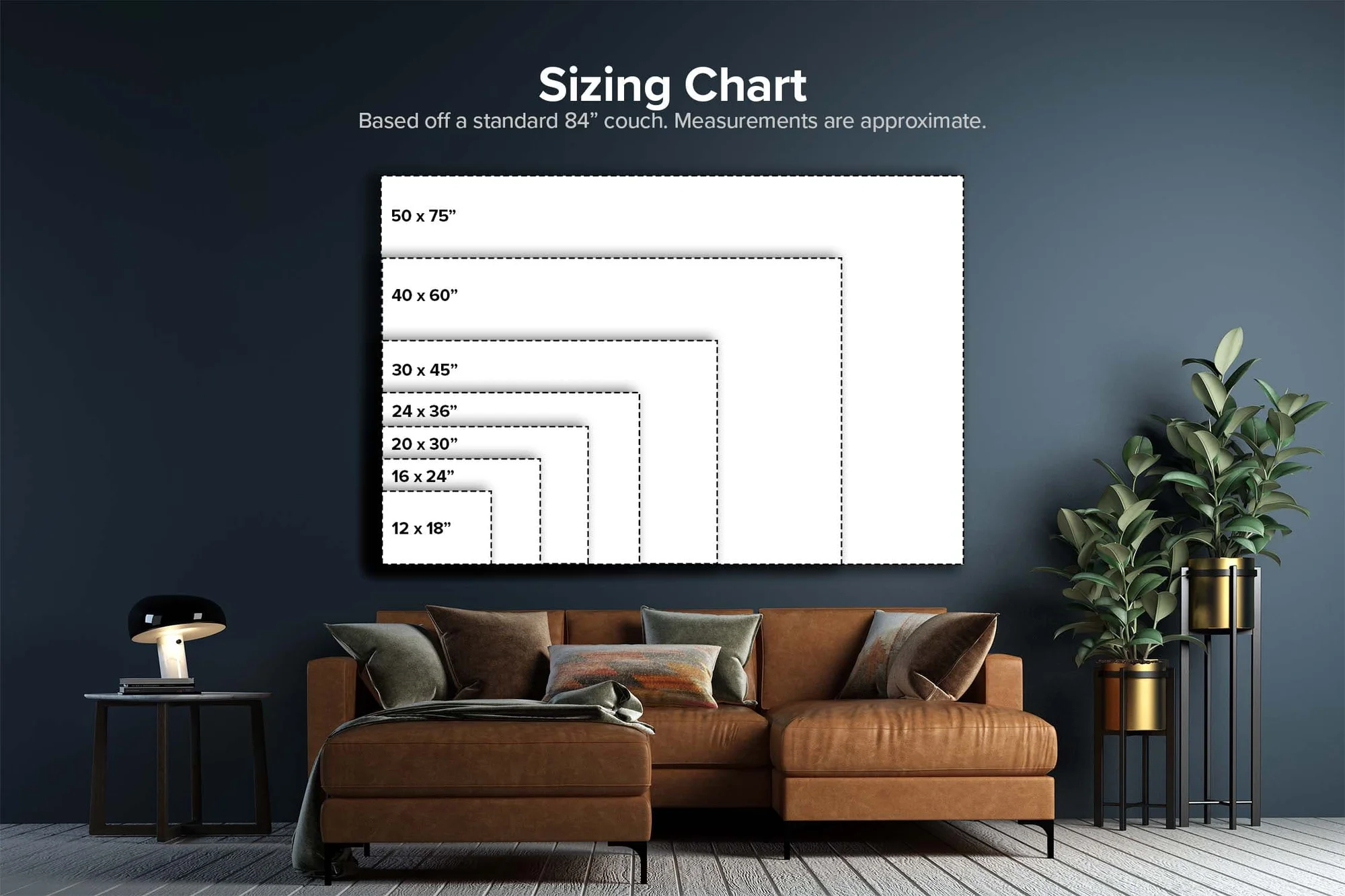
For a particularly large wall, I really do recommend seeing the artwork at scale before you order anything. Measurements tell you what fits. A complimentary wall mockup tells you whether it actually feels right once it's there.
A 48 inch print can look totally reasonable on paper and then feel small once it's actually hanging above a big sofa. A 72 inch version can change the whole wall. That's a hard thing to judge from a thumbnail on a screen.
This is especially useful if you're a designer or a commercial buyer making a real investment in artwork. Seeing the photograph, the orientation, and the size in the actual room takes most of the guesswork out of it.
You can also get a feel for the size of a print by using the "See it in a room" option on each individual print page. This allows you to see the selected print in a sample of settings compared to common living room items like a sofa. It's a good close estimate to give you an idea if you're on the right path and then you can reach out, if wanted, to get a custom mockup prepared for your space.
Frequently Asked Questions
What is the best print size for a very large wall?
For a very large wall, a single print somewhere in the 60 to 90 inch range is usually a good place to start. Bigger spaces can support prints beyond 90 inches when the photograph, the viewing distance, and the architecture all support it. Let the wall decide the scale, not some arbitrary max size.
Is a large print better than several smaller prints?
Not always. A well thought out collection can look great. But if the goal is a strong focal point, one substantial photograph usually carries more visual weight than several small pieces scattered around a large wall. That's especially true in executive offices and contemporary interiors.
What material is best for large photography prints?
There's no single best material here. ChromaLuxe metal is great for crisp detail, durability, and modern spaces. HD acrylic TruLife prints are especially good when depth and luminous color matter. The acrylic prints can often give you an almost 3D experience. Canvas gives you a softer, more traditional look with less glare. The room's lighting and the character of the photograph should really drive the choice. My first recommendation would be to go with metal as it's a personal favorite, has stunning quality and detail, and can be framed or mounted directly with no framing needed.
Can landscape photography be printed larger than 60 inches?
Absolutely, as long as the original file can support it. A properly shot, high resolution photograph can hold up at very large sizes. Focus, processing, cropping, and the intended viewing distance all matter here too. Not every photograph should be blown up the same amount, which is part of why image selection matters so much in the large format process. I've printed many of my images at sizes 20 feet wide and sometimes larger and they turned out phenomenal.
See Your Artwork at the Right Scale Before You Buy
Choosing the best print sizes for large walls shouldn't be a guessing game. If you've got a specific wall in mind, send me the dimensions and a photo of the space. I'll put together a free wall mockup showing how a specific landscape, orientation, and size would actually look once it's hanging there.
It's a small step, but it makes a real difference when you're investing in something at this scale. You can judge the proportions, see how the photograph sits with the furniture around it, and figure out whether metal, acrylic, or canvas is the right call before you commit to a final size.
Request a free wall mockup and see what the right photograph, scale, and material can do for your wall. Or simply reach out to me to discuss your project and what options you have.