,fit=pad/https://images.clintlosee.com/images/clint-losee-photography-logo-b0be73a8.webp)

How to Choose Utah Wall Art
The right Utah wall art is about more than choosing a beautiful photograph. Learn how scale, composition, lighting, and print medium determine whether a landscape becomes a defining piece of a room.
How to Choose Utah Wall Art for Your Home or Business
Choosing Utah wall art takes more than finding a photograph you like and figuring out what size will fit the wall. Once a landscape photograph gets large enough to command a room, everything else starts to matter: the architecture around it, the available light, how far away people will actually stand when they look at it, the colors already living in the space.
A small photograph gets appreciated as an image. A large one, chosen well, becomes part of the room.
That difference matters most when you're picking Utah photography prints for a home, an executive office, a conference room, a reception area, a clinic, a hotel, anywhere that's been thought through. Utah gives you an unusually wide range to draw from, from snow-covered Wasatch peaks to the sandstone walls and deep canyons of southern Utah. The hard part is finding the one that actually belongs on your wall.
How to Choose Utah Wall Art: Start With the Space, Not the Photograph
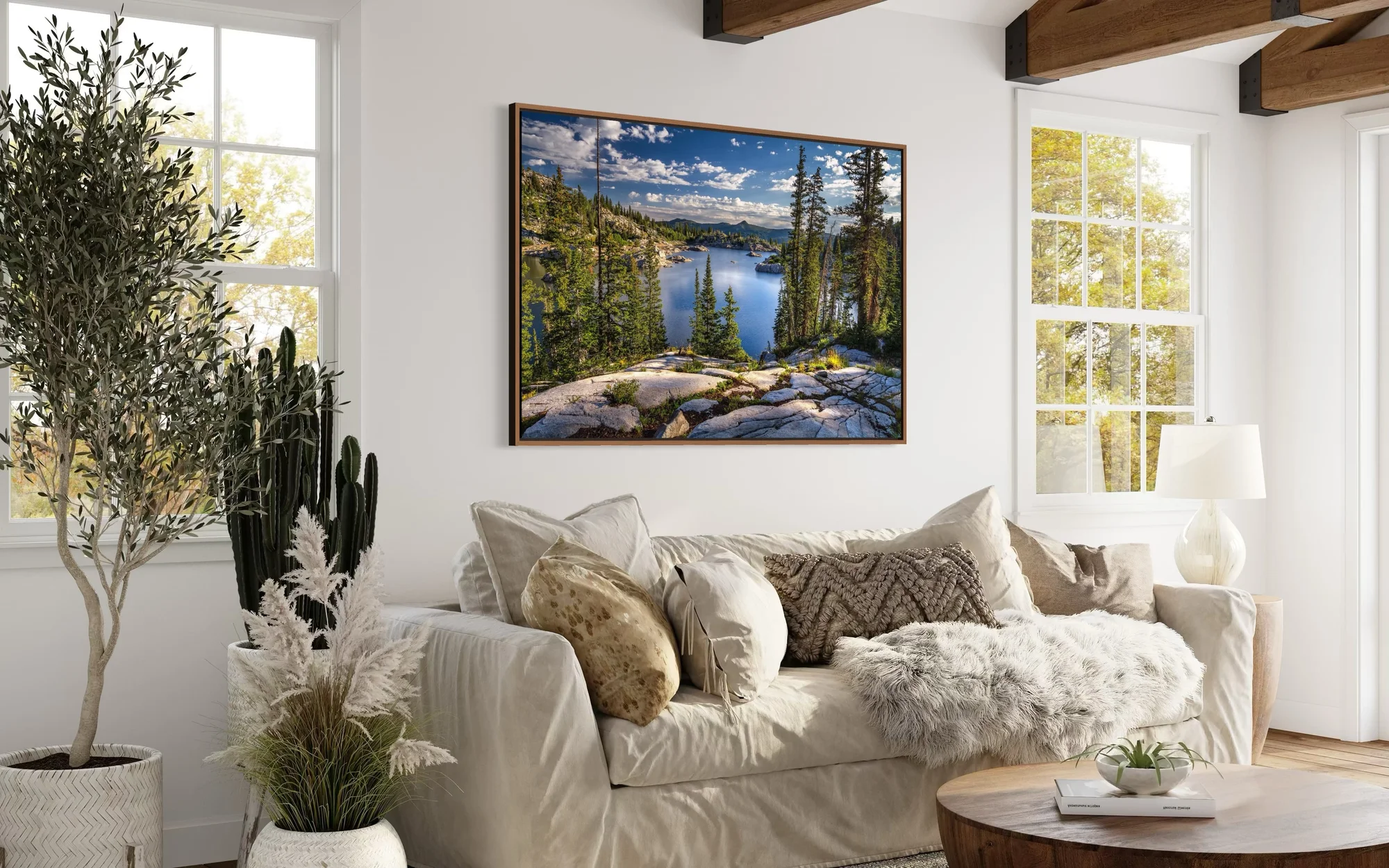
The easiest mistake to make is choosing the photograph first and figuring out the room after.
Start with the wall instead.
How big is it? How far away will people typically be standing? Where does the daylight come from? What's the furniture doing? Is there already a color or pattern in the room fighting for attention?
Answer those and the field narrows fast, before you've even started looking at images.
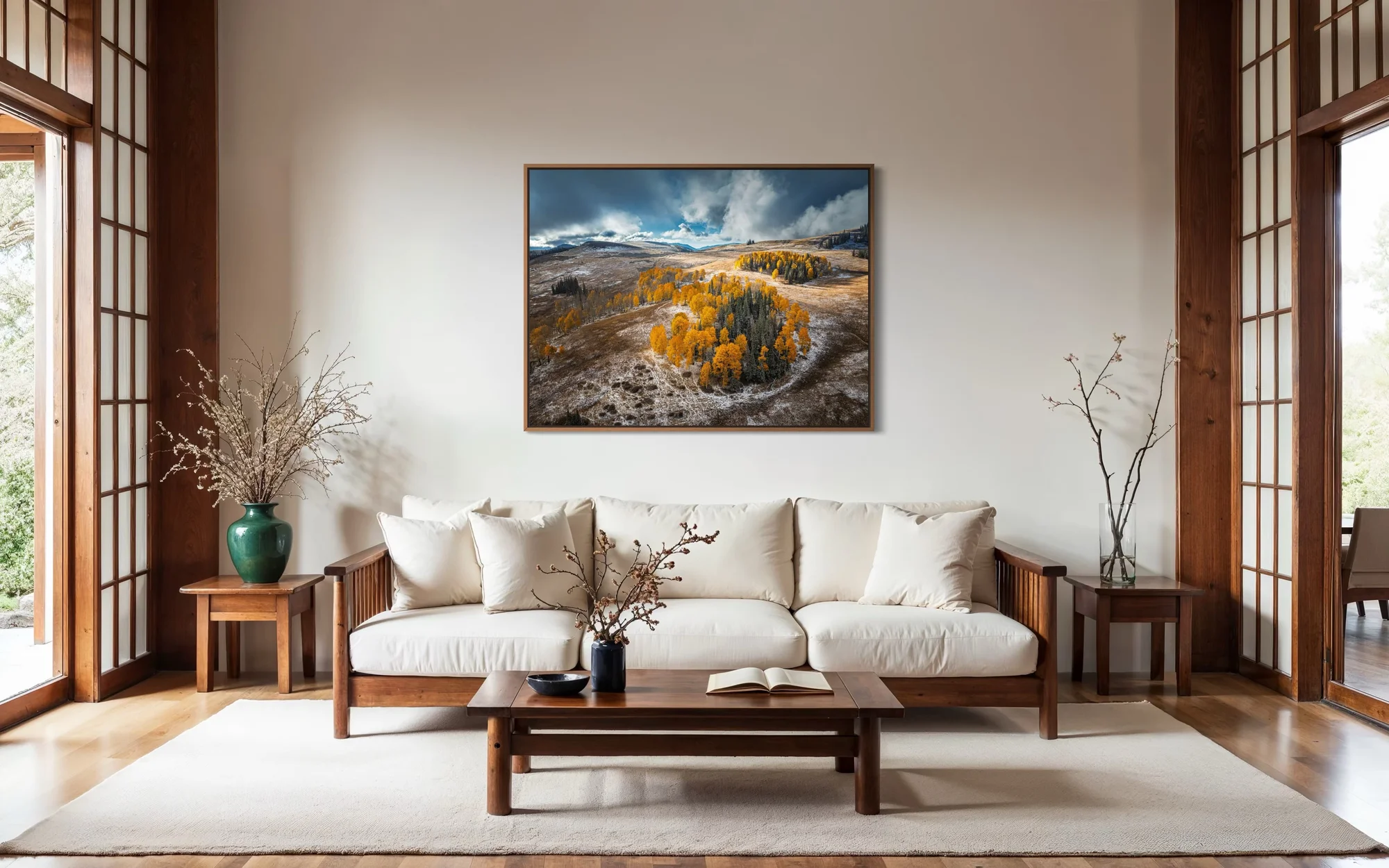
In a home, a quiet mountain composition might be exactly right over a bed or in a reading nook, while a broad panoramic landscape carries a lot more weight above a large sectional or a fireplace. In an office, I'd argue you need to be even more deliberate. A conference room usually wants an image with enough structure to hold a long wall. An executive office often does better with something simpler, something that gives the eye a place to land and stay.
The photograph needs to belong to the room. It shouldn't look like it's hanging there because the wall happened to be empty.
Think in terms of visual weight
Artwork has weight, even when it doesn't weigh anything. A dark photograph with a strong foreground pulls a room toward it. A high-key winter landscape, at the exact same dimensions, feels much lighter. A wide panoramic composition stretches a wall. A vertical mountain photograph pulls the eye up.
Same photograph, two different rooms, two completely different results. That's not a coincidence, it's why scale, contrast, orientation, and composition all matter as much as the subject itself.
Good placement isn't about the artwork disappearing into the room. It's about the presence feeling intentional rather than accidental.
Choose the Utah Landscape That Fits the Character of the Room
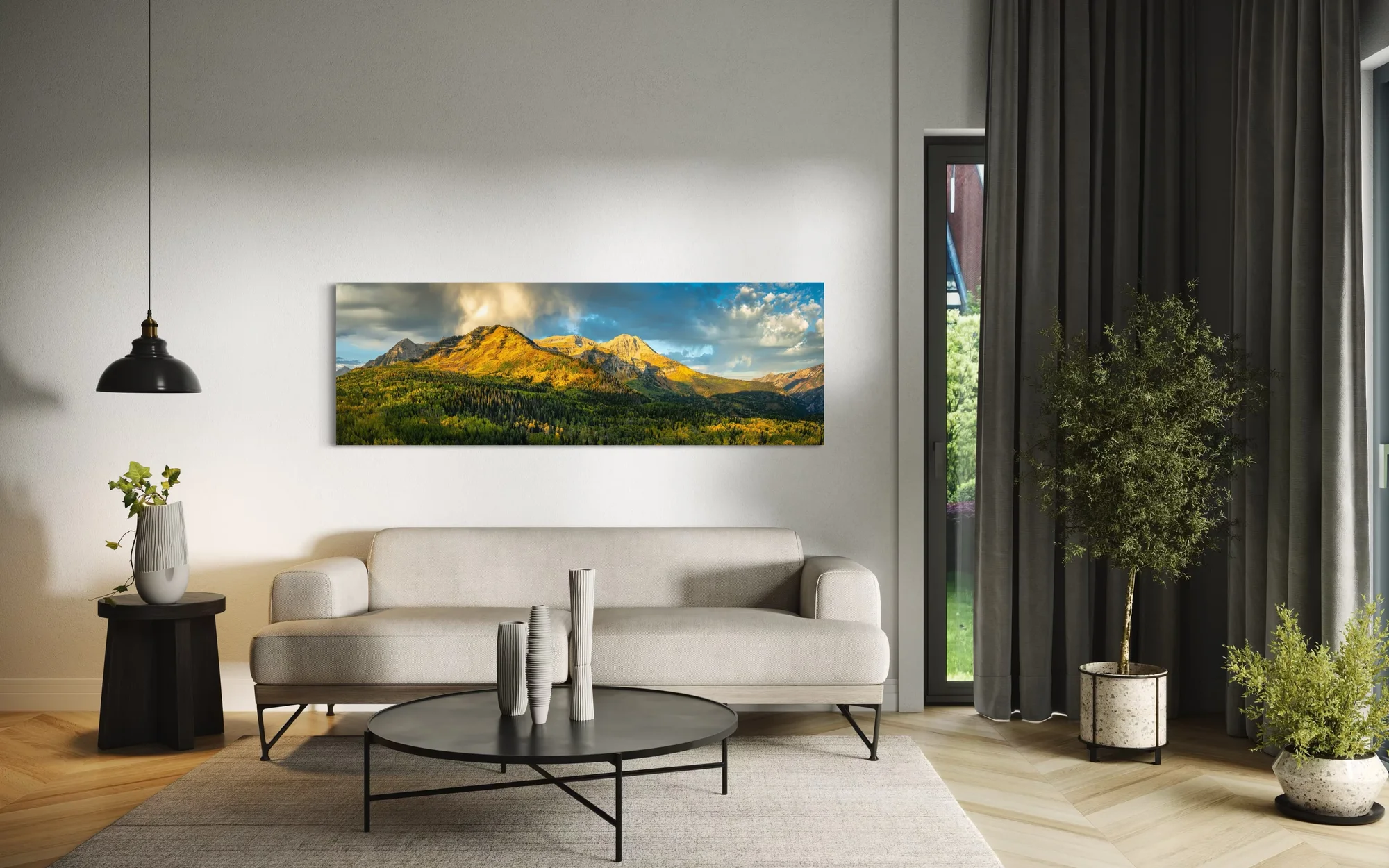
Utah is almost unfair in how much range it gives a photographer. The Wasatch doesn't look anything like Zion. Southern Utah has its own visual language entirely, built out of sandstone, shadow, distance, and warm desert light. Mountain country is a different world again, especially in winter, when the snow strips everything down to its structure.
When you're choosing Utah landscape art, start by asking what atmosphere you actually want in the room.
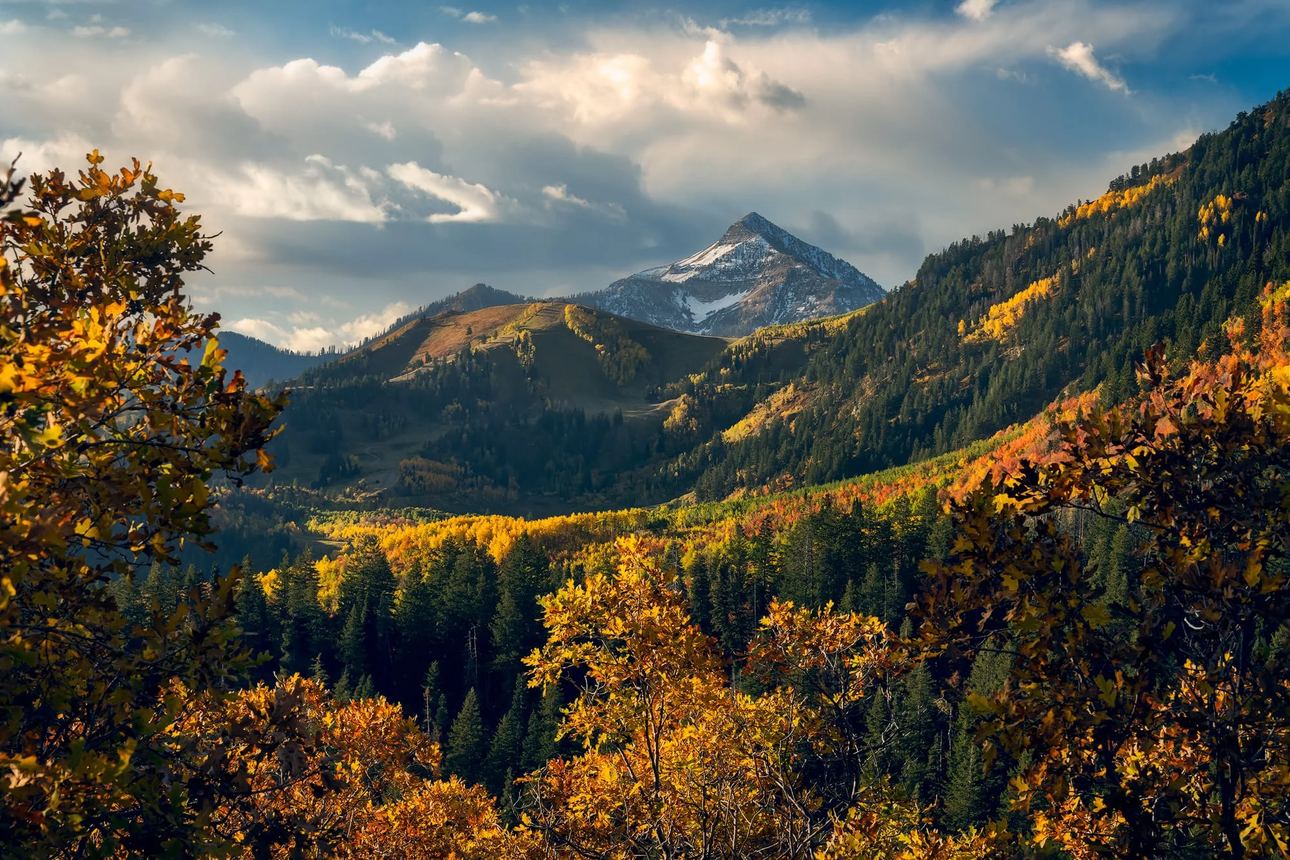
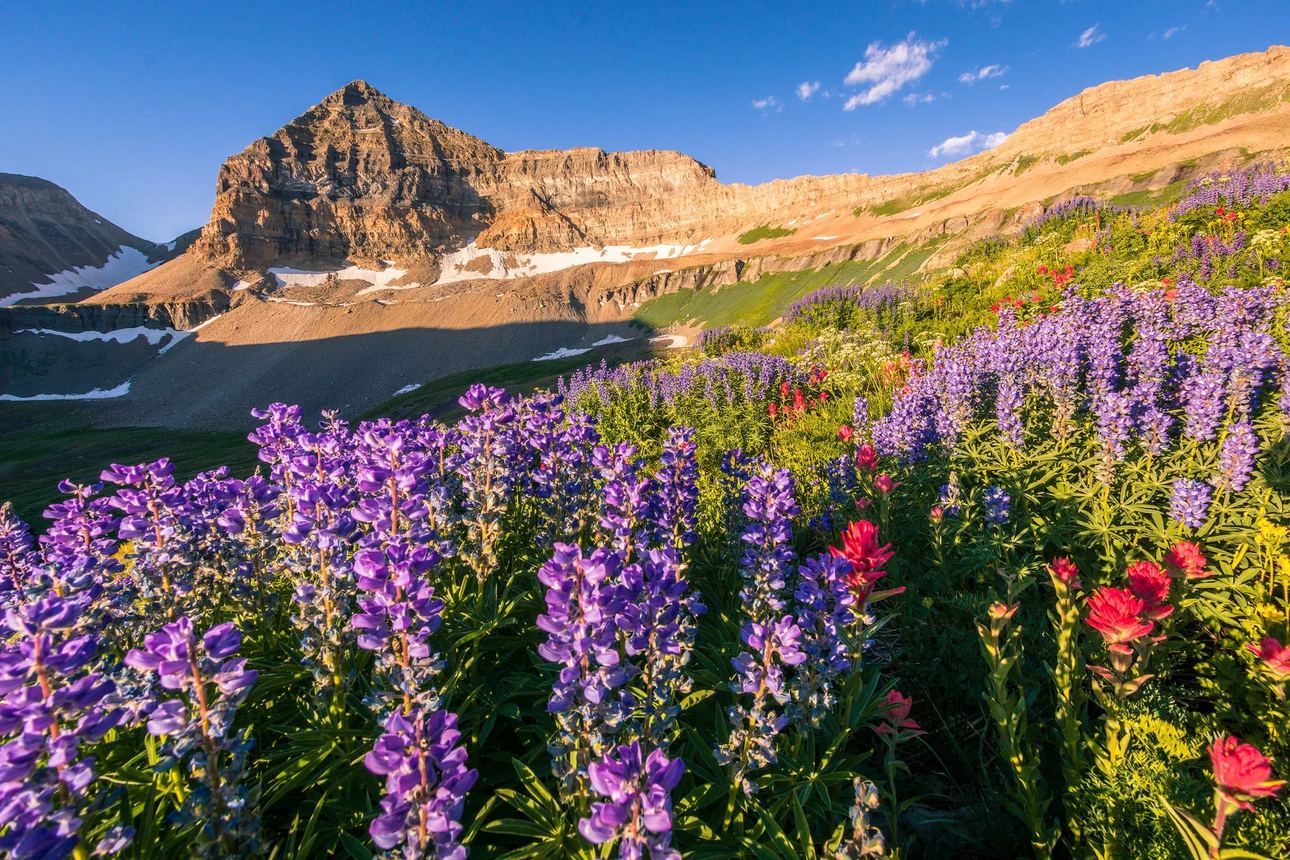
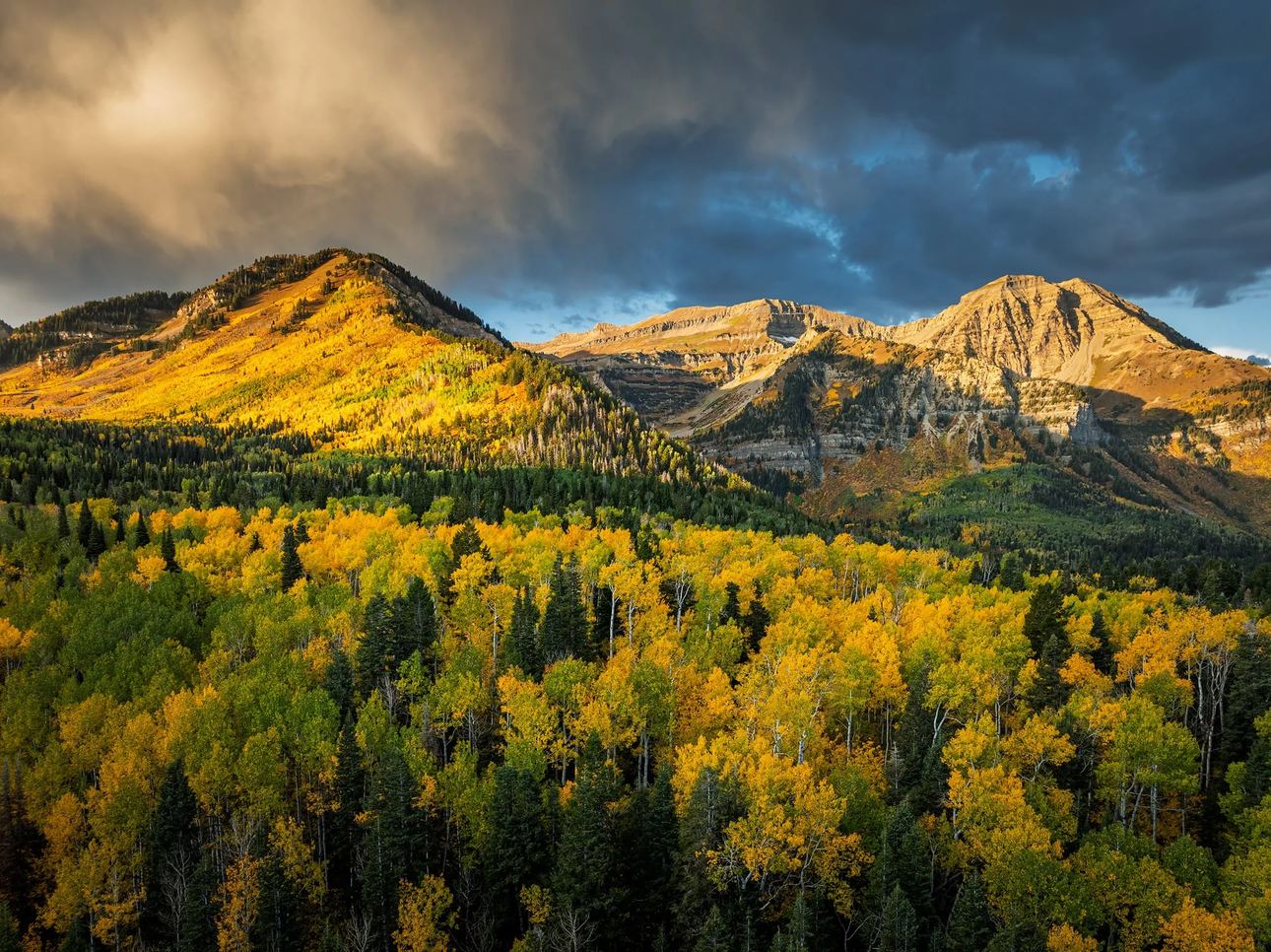
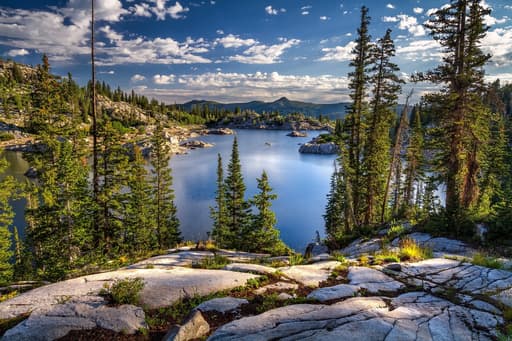
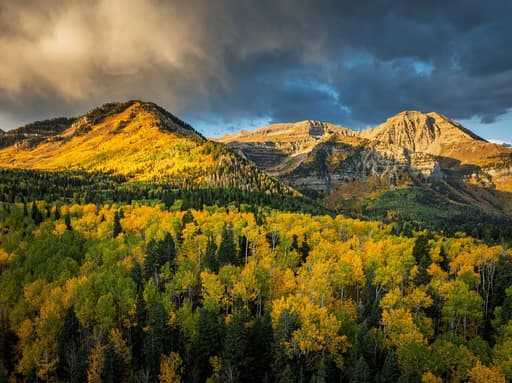
Mountain landscapes bring a sense of permanence and quiet. Wasatch peaks, especially in winter, sit naturally with neutral interiors, stone, concrete, glass, cooler contemporary palettes.
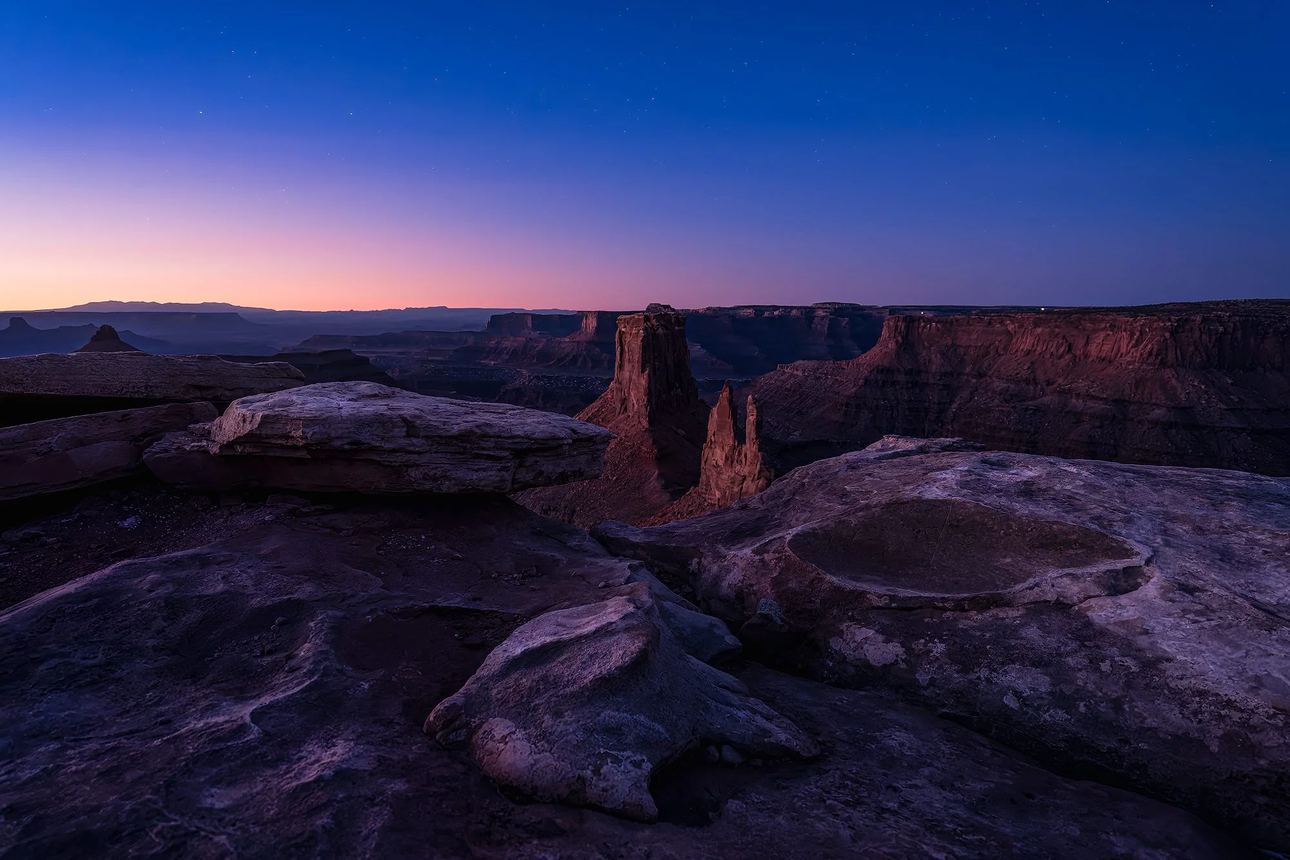
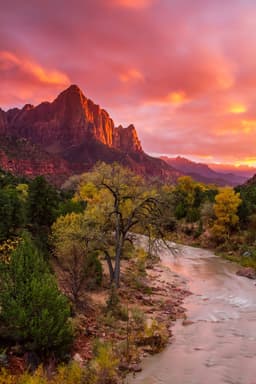
Southern Utah and red rock landscapes bring warmth and stronger geological form. The reds, oranges, ochres, and deep shadows work particularly well against wood, leather, natural stone, warm metal finishes.
Desert landscapes give a room room to breathe. Broad sky, distant horizon, a simplified composition, all of that helps when the interior already has a lot going on.
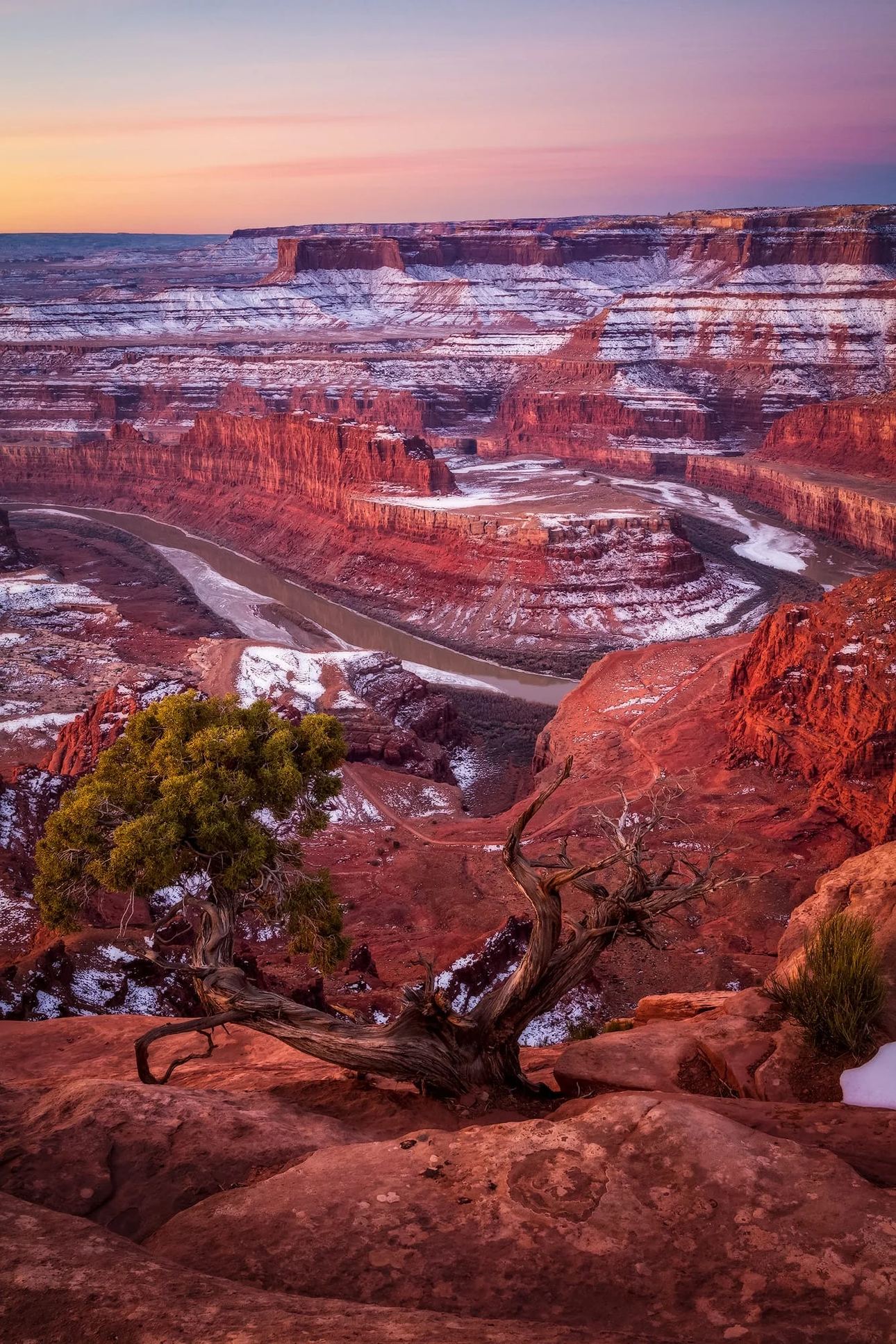
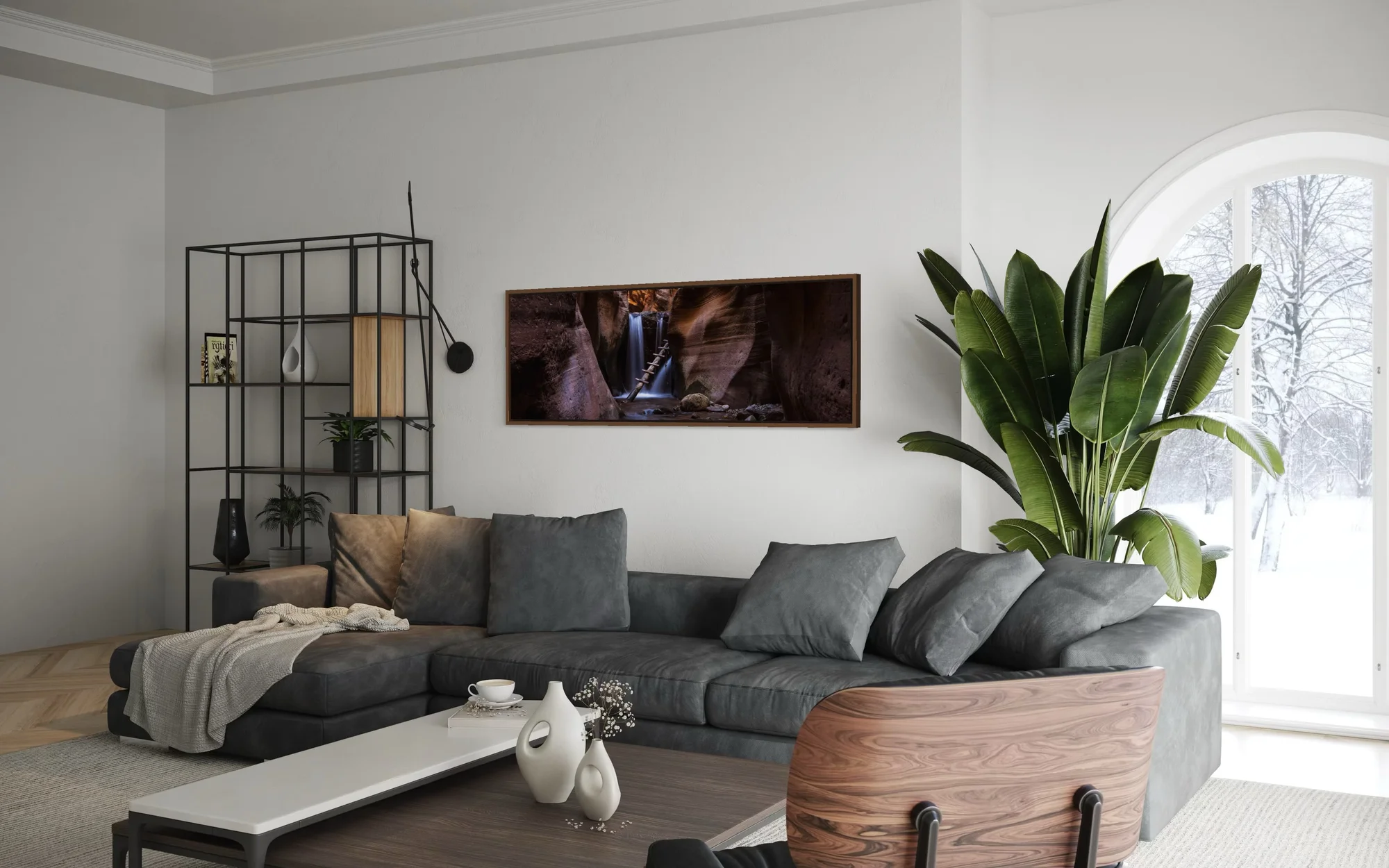
Canyon landscapes bring stronger lines and depth. Cliffs, rivers, formations receding into the distance, layered rock, that kind of image leads the eye and gives a large wall real depth.
There's no single "best" Utah landscape for wall art. It depends entirely on what the room needs.
Why Scale Matters More Than Most Buyers Expect
A lot of wall-art purchases go wrong before the print even gets made. The piece is just too small.
A photograph can look substantial on a monitor and still vanish above a large sofa, behind an executive desk, on a twelve-foot office wall. Screens lie to you about scale. Everything looks bigger on a monitor than it will on your wall.
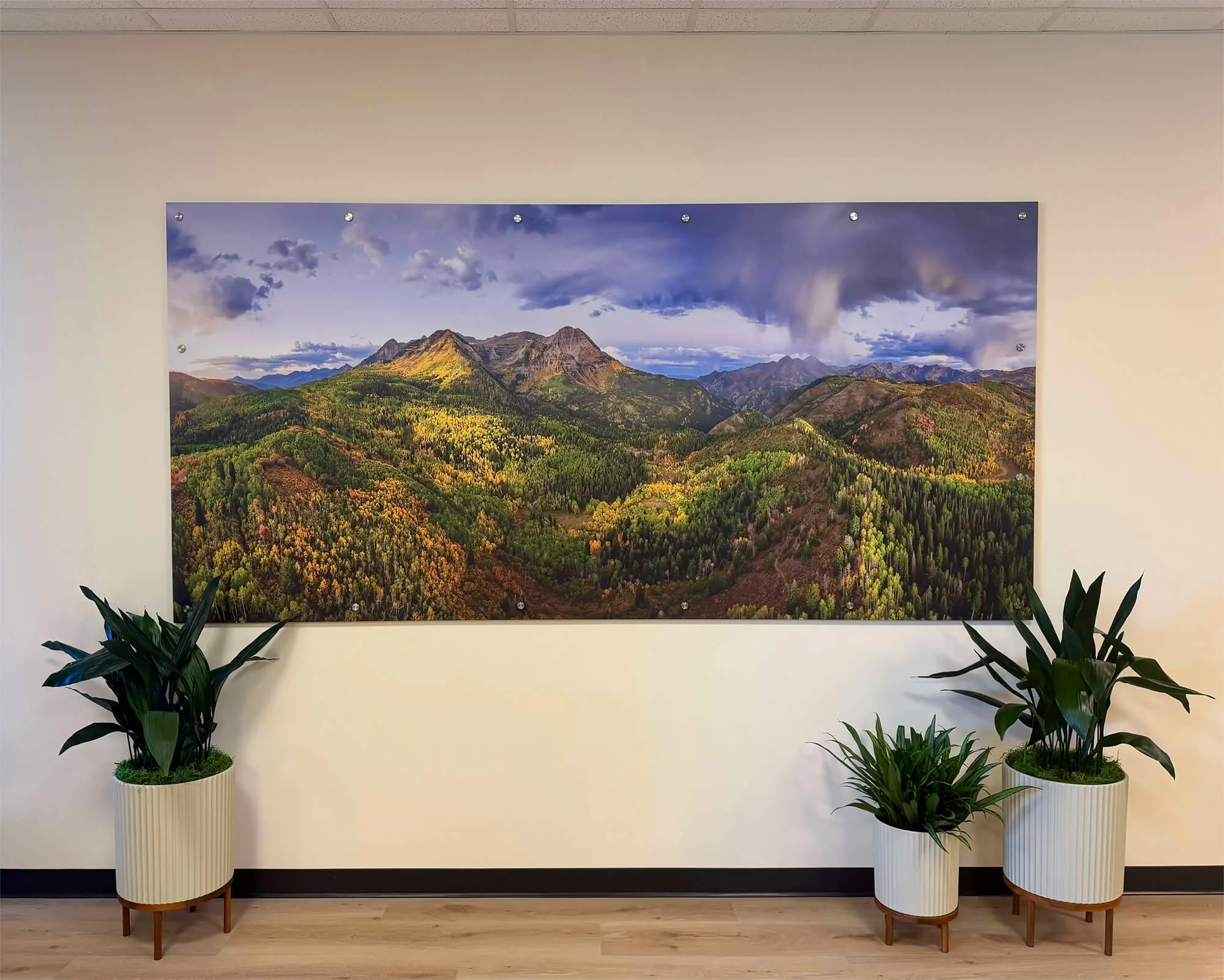
Large-format photography needs actual physical presence. The goal isn't to hang a photograph on the wall, it's to give that photograph enough scale to participate in the architecture around it.
This is where panoramic Utah landscapes tend to earn their keep. A 60-, 72-, or 90-inch-wide photograph is a completely different object than a 24-inch print. It can set a visual axis across a room instead of sitting there as one more small thing on the wall.
That doesn't mean every wall needs to go huge. A narrow wall, a hallway, a smaller room, those often call for restraint. Proportion is the goal, not size for its own sake.
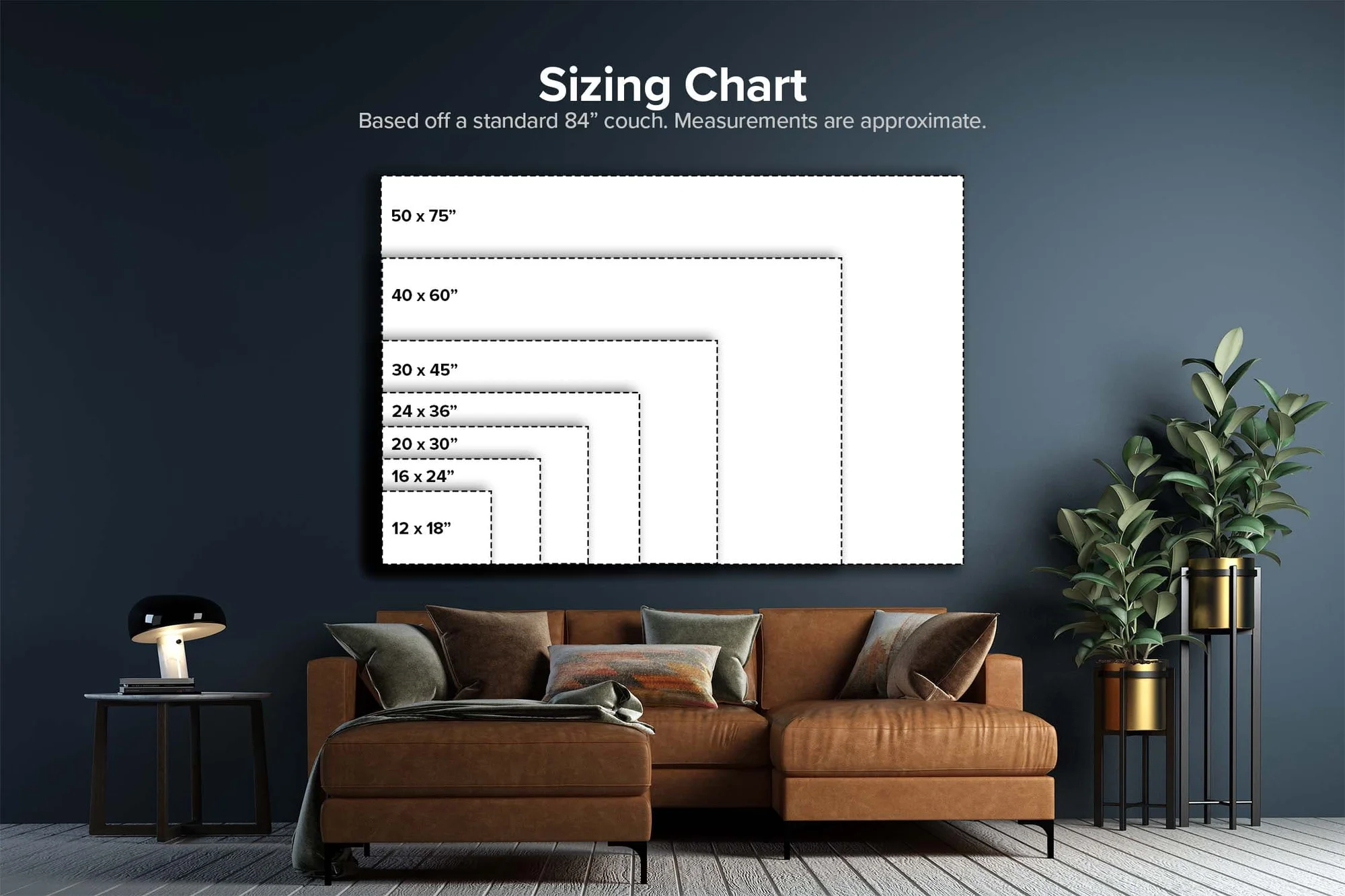
It's surprising to think about really. Picture a 16x24 print in your mind and typically you think that is a pretty decent size print. I know I did. Put that same print size up on your wall in a living room or office and suddenly that print looks like a spec on the wall. That's not to say a print that size doesn't work. It certainly can. It just needs to fit the wall.
A useful starting point for sizing
Look at what the piece will sit near. A sofa, a credenza, a fireplace, a reception desk, a conference table, any of those give you a reference point. The photograph needs enough width and presence to relate to that object without swallowing it.
Then think about viewing distance. A landscape with fine sandstone texture or delicate mountain detail rewards someone standing close, but its bigger shapes and tonal structure still have to hold up from across the room.
There's one more reason large-format sizing matters: technical quality gets unforgiving fast.
A photograph headed for a 90-inch reproduction can't be treated like a web image stretched until it fills the wall. Focus, lens performance, dynamic range, fine detail, noise, processing, the quality of the original capture, all of it becomes more visible as the print grows.
Lighting Can Change Which Print Medium You Should Choose
Before you choose the material, look at the light.
A photograph that looks flawless under gallery lighting can behave completely differently next to a large window or under rows of office LEDs. Reflections, viewing angles, daylight shifting throughout the day, all of it changes how the piece actually lives in the room.
That matters even more in commercial spaces, where the artwork gets seen from several directions over the course of a day.
ChromaLuxe Metal Prints
ChromaLuxe metal prints fit contemporary interiors naturally, where clean lines, durability, and a crisp presentation matter. The rigid surface also holds up well in spaces that see more handling and foot traffic.
Metal tends to shine with photographs that have saturated color, clean tonal transitions, water, sky, or that luminous desert light. It reads modern and precise, and it works beautifully in all homes, offices, hospitality spaces, anywhere traditional framing would feel too heavy.
If you're not sold on the more modern display of metal prints with no frame, these prints can still be mounted in a traditional frame. You get all of the benefits of the quality and display of a metal print and still can have the more traditional frame setup we all love. You just don't have to deal with the custom glass in front like normal paper prints.
HD Acrylic TruLife Prints
When a photograph lives or dies on luminosity, depth, and subtle tonal detail, HD acrylic TruLife fine art prints do something a standard print can't.
Acrylic gives the image physical depth. Highlights get a sense of light and dimensionality that's genuinely hard to pull off with a conventional print. On the right photograph, it can feel almost three-dimensional.
I'd call it the right choice for a signature piece, especially when one photograph is meant to carry most of a room's visual identity. For luxury artwork, HD acrylic TruLife prints give a collector-grade piece the presentation it deserves.
Canvas Gallery Wraps
Canvas gallery wraps take the quieter route. The surface is softer, more tactile, with a traditional feel that suits residential interiors, hospitality settings, and any space where the artwork should feel woven into the furnishings rather than standing apart from them.
Canvas is also worth considering anywhere reflections would be a problem. Instead of competing with windows and light sources, the surface tends to fade back and let the photograph carry the room.
Choose Utah Wall Art Differently for Offices and Commercial Spaces
Art in a home can be deeply personal. In a business, it's saying something too, whether anyone means it to or not.
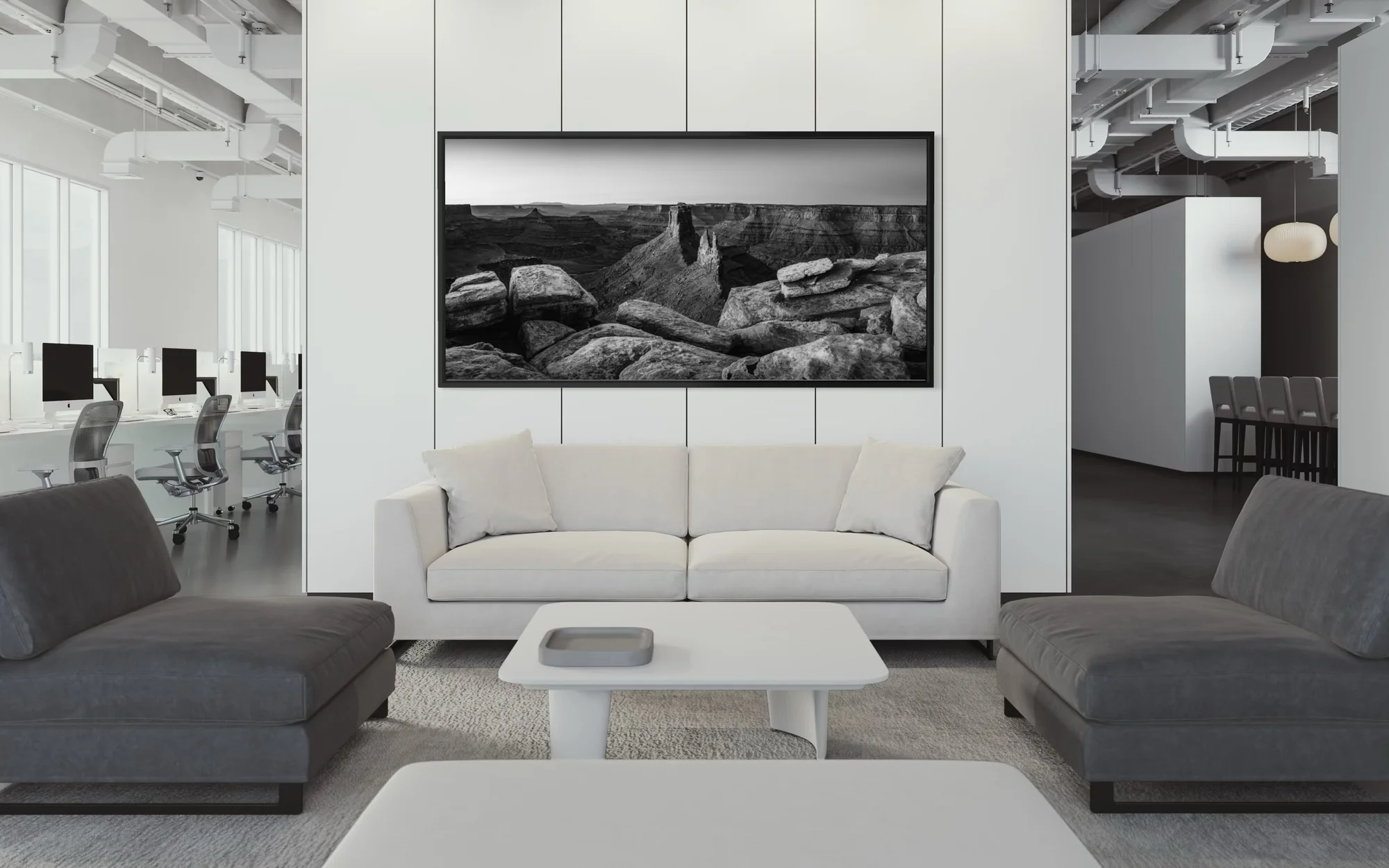
A reception area sets a tone before a single word gets spoken. An executive office says something about the person sitting in it. A conference room needs enough presence to hold a substantial wall without pulling focus from the meeting. In healthcare settings, the balance shifts again, the artwork needs to offer relief without demanding attention it hasn't earned.
This is where generic wall decor falls flat. A mass-produced mountain print fills a wall. It doesn't give the space a point of view.
A well-made Utah landscape does more than that. It connects the space to the region, and it shows a level of care that clients, employees, and visitors feel, even when they couldn't tell you why the room works.
Consider the viewing environment
Commercial artwork rarely has one ideal vantage point. Someone walks past it. Someone sits across from it for an hour-long meeting. Someone catches it at an angle on their way to the elevator, under completely different light than they saw it in that morning.
Composition matters here more than almost anywhere else. Images with real structure, depth, and controlled complexity hold up across all those distances. The print medium matters too, especially in busy spaces where durability and reflections stop being aesthetic questions and start being practical ones.
For offices, I lean toward photographs that give the eye somewhere to rest. A broad mountain view, a layered canyon, a well-composed desert scene, that kind of image offers a pause without turning the wall into one more thing competing for attention.
The Role of Nature Photography in a Professional Environment
Biophilic design has gotten a lot of attention lately, and it's earned it. Research on nature exposure and attention restoration suggests visual contact with natural environments can help people recover from the kind of mental fatigue that builds up in demanding, high-stimulation spaces.
That's not the same as saying a mountain photograph will make a team more productive. That claim goes further than the research actually supports, and I won't make it.
What's true is simpler. A thoughtfully designed space uses natural forms, materials, and imagery to feel calmer and less visually exhausting to be in all day.
Fine art landscape photography adds something else on top of that: a sense of place.
For a Utah company, a well-made photograph of the Wasatch or southern Utah means more than a generic stock landscape ever could. It ties the space to where the company actually operates, where its clients live, where its employees spend their working hours.
For more on how landscape photography works in residential spaces specifically, I wrote about it here: how fine art nature photography transforms your home.
Look for Photographs That Were Made for Large-Format Printing
Not every photograph earns the right to be 72 inches wide.
Large printing doesn't forgive much. Weak focus, noise, awkward stitching, over-processed detail that looked fine on a screen, all of it shows up the moment a photograph takes over several feet of wall.
A large print needs to say something from across the room, and then reward you when you walk up close.
That starts the moment the photograph gets made, not in post-processing. Camera position, lens choice, focus, exposure, the atmosphere that day, the composition, all of it shapes what eventually happens when the file becomes a physical object hanging on someone's wall.
Utah's landscapes make this obvious fast. Sandstone texture, distant mountains layered on top of each other, delicate snow detail, the shift in desert light, all of that can carry a large photograph, but only if it survives the process intact. That takes more than owning a camera with a lot of megapixels.
When you're looking at Utah photography prints, the real question is whether the photograph was made with large-format printing in mind from the start. A file being big enough to print large and a photograph being good enough to print large are two very different things.
Common Mistakes When Buying Utah Landscape Art
Buying for the empty wall instead of the room
An empty wall asks an obvious question: what fits here? The better question is what the wall should actually do.
Maybe it's a focal point. Maybe it's calm. Maybe it's warmth, distance, a sense of place, a sense of scale. Once you know the job, picking the photograph gets a lot easier.
Choosing a print that is too small
Large rooms make this mistake obvious fast. A beautifully printed photograph still feels insignificant when the furniture and architecture around it are simply bigger.
No amount of quality fixes bad proportion.
Ignoring reflections
Think about the windows, the overhead fixtures, the glass partitions, and where people will actually be standing when they see the piece. A reflection that seems minor when you're standing there for two minutes can get genuinely distracting once you're living or working with it every day.
Choosing the medium before choosing the photograph
Metal, acrylic, and canvas aren't three versions of the same thing. Each has its own character and its own strengths.
Pick the photograph first. Then pick whichever presentation lets that specific photograph do its best work in that specific room.
Buying a photograph because the location is recognizable
Recognizing a place isn't the same as the photograph being good.
A photograph doesn't need to look like a postcard just because it's a famous Utah location. Some of the strongest wall pieces are ones where the light, color, and geometry carry the image, and you don't even need to know where it was taken for it to work.
How to Choose Between Mountain and Southern Utah Wall Art
If you're torn between Utah's mountains and landscapes and the red rock country down south, start with the room's palette and geometry, not with which landscape you personally love more.
Mountain photography tends to sit naturally with cooler interiors, neutral walls, contemporary architecture, and spaces that want a sense of vertical structure or distance. Snow, granite, forest, atmospheric layers, that's a restrained palette, and it settles into a sophisticated interior without ever getting loud.
Southern Utah photography is a different animal. Zion, Canyonlands, and the red rock country around them bring warm color, dramatic geology, deep shadow, strong natural lines.
If the room already has warm wood, leather, natural stone, bronze, or brass, those landscapes tend to click into place almost on their own.
You can browse the full Utah Landscape Photography Prints collection, or go straight to Southern Utah and red rock landscapes, Desert Southwest photography, or mountain landscape photography.
A Practical Utah Wall Art Buying Checklist
Before you order a large-format photograph, look at the whole project, not just the image.
What are the exact dimensions of the wall?
How far away will the photograph normally be viewed?
What furniture or architectural feature will it relate to?
Where does natural light enter the room?
Are overhead lights or windows likely to create reflections?
Does the photograph work with the existing color palette?
Does the composition hold up at the intended physical size?
Which print medium suits both the photograph and the environment?
Was the original photograph captured with large-format reproduction in mind?
Does the artwork have a meaningful relationship to the space?
If you're unsure about a few of these, talk to the photographer before you order. A short conversation up front is a lot cheaper than an expensive piece ending up on the wrong wall, at the wrong size, in the wrong material.
Why Work With a Utah Landscape Photographer?
There's a real difference between photographing Utah once and working the Utah landscape year after year.
Light changes. Weather changes. Snow reshapes a mountain overnight. A storm can completely rewrite the character of a canyon in an afternoon. The same location, on a different day, at a different hour, produces a completely different photograph.
That experience also shapes which photographs are even worth turning into large-format artwork in the first place. The goal was never just documenting a recognizable place. It's finding the combination of composition, light, atmosphere, and technical quality that can actually hold up across several feet of wall.
For collectors, homeowners, and designers, that distinction matters. You're not buying a generic picture of Utah. You're commissioning a specific, carefully made interpretation of a landscape as a substantial physical object.
See the Artwork in Your Space Before You Buy
A product photo only tells you so much.
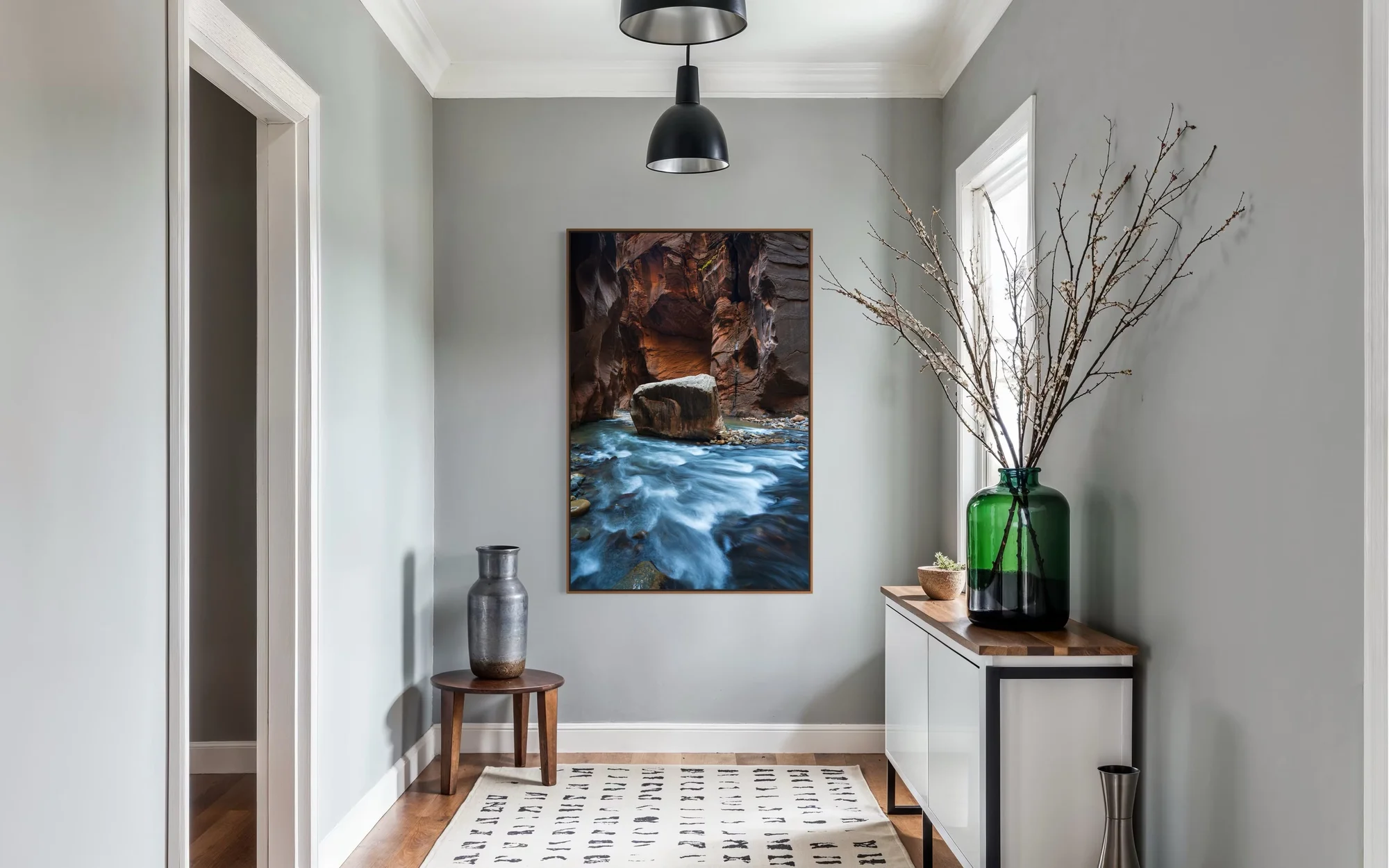
When you're considering a large-format piece, seeing it on your own wall answers the scale, placement, color, and visual-weight questions immediately, in a way no thumbnail image ever will.
I offer a free wall mockup for homeowners, interior designers, business owners, and organizations considering large-format landscape photography. Send me a photo of the wall with its approximate dimensions, and I'll show you how a selected Utah landscape would actually look in your space.
This matters most when you're considering a statement piece in the 60- to 90-inch range. At that size, a few inches in either direction can shift the balance of the entire wall.
The mockup also helps you compare presentation options and figure out whether ChromaLuxe metal, acrylic, or canvas is the right call for your space.
Request a Free Wall Mockup and see how a large-format Utah landscape would look on your wall before you commit to the final piece.
Frequently Asked Questions About Utah Wall Art
What is the best size for Utah wall art?
There's no universal answer. It depends on the wall, the furniture, viewing distance, architecture, and the composition of the photograph itself. On a substantial wall, going bigger usually gives the piece enough visual weight to become a true focal point. What matters is proportion, not just buying the biggest print you can afford.
Is metal, acrylic, or canvas better for landscape photography?
They each do something different. ChromaLuxe metal suits contemporary spaces where durability and a clean look matter most, but don't discount it for your home either. HD acrylic are the right call when luminosity, depth, and dimensionality are central to the photograph. Canvas gives you a softer, more traditional presentation and works well anywhere reflections are a concern.
What Utah landscapes work best as large wall art?
Mountain, canyon, desert, and southern Utah landscapes can all work at large scale. The real question is which composition fits your room. Panoramic scenes tend to work especially well across long walls, while vertical mountain photographs complement spaces with real ceiling height.
Can I see what a photograph will look like on my wall before purchasing?
Yes. A free wall mockup shows how a selected Utah landscape and proposed size will actually look in your space. It's especially useful for large-format work, where scale and placement matter far more than they do with something smaller.
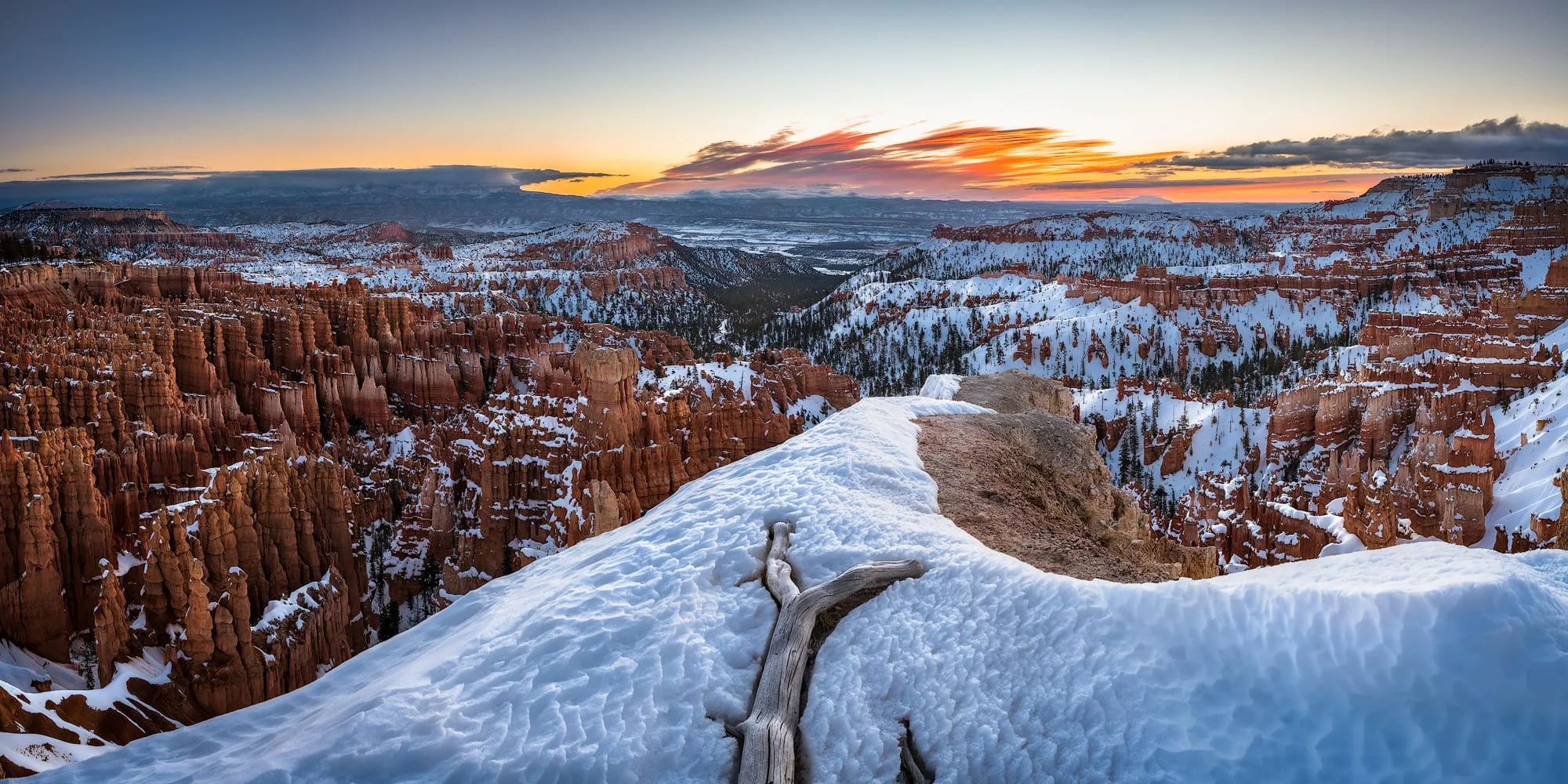
Choose Utah Wall Art as a Statement, Not a Filler
Good Utah wall art isn't there to fill an empty rectangle.
It builds a relationship between the landscape, the architecture, and the people spending time in that space.
In a home, that might be a mountain photograph giving a room a quiet sense of permanence. In an executive office, it might be a large-format Utah landscape that ties the space to the region without reading as corporate decoration. In a reception area or conference room, the right photograph sets a tone before the first conversation even starts.
That's the whole approach behind How to Choose Utah Wall Art. It's photography, design, scale, light, and production, working together, not decoration for decoration's sake.
The photograph matters. The size matters. The light hitting it at two in the afternoon matters. And so does the material used to turn the original capture into something meant to stay on that wall for years.
If you've got a wall that deserves more than generic decor, reach out to me directly with any questions or request a free wall mockup. I'll help you land on the right photograph, scale, and print medium for your space, whether you're furnishing a home, designing an office, or picking artwork for a larger commercial environment.